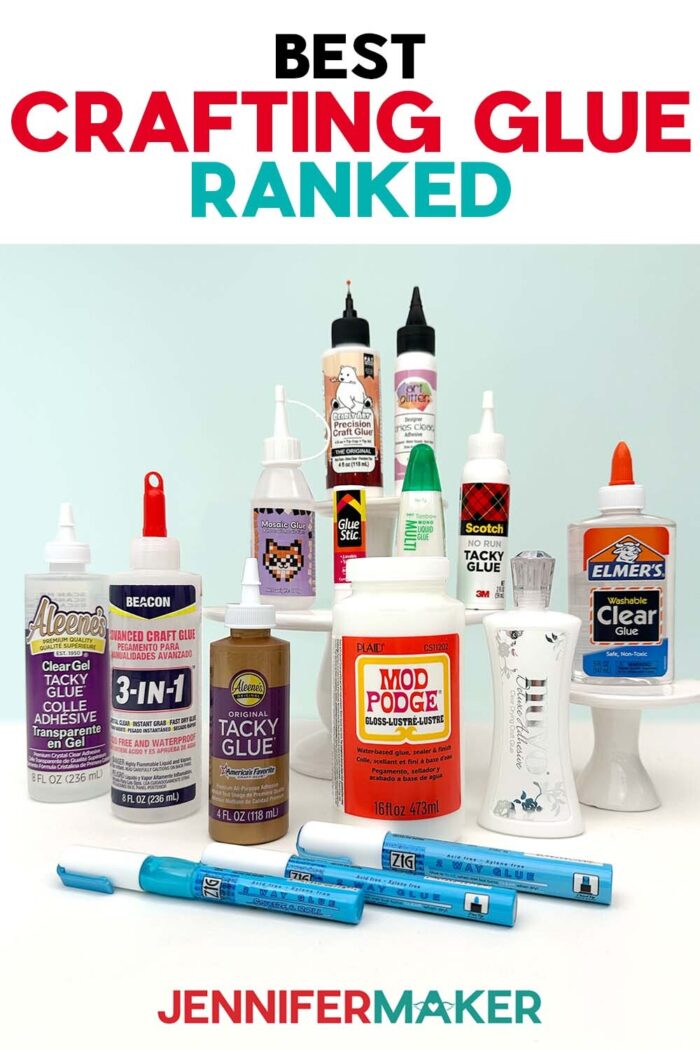
Let’s learn about the best craft glues to use for your papercrafting projects!
The last time I tested craft glue, I thought I had a pretty good idea of what would happen. But craft supplies change, bottles age, new glues arrive on the scene, and the projects we make keep getting more detailed. So I decided it was time to update our old glue test and find out which of the best craft glues really deserve a spot in our craft carts, and which ones we should keep on hand just in case.
Watch my full testing process for the best craft glues:

Do you want to test your own glues to match your crafting style and favorite materials? Let me show you how I tested mine! This post contains some affiliate links for your convenience (which means if you make a purchase after clicking a link I will earn a small commission but it won’t cost you a penny more)! Read my full disclosure policy.
The best craft glue for detailed paper crafting in my test was Bearly Art Glue because it gave me the best balance of control, clean appearance, reliable hold, and precise application. But that doesn’t mean it’s the best choice for every project. Mod Podge Gloss Sealer is still better for broad coverage and sealing, and stronger adhesives like Beacon 3-in-1 may make more sense when strength matters more than a perfectly clean finish.
That’s the tricky part about glue. The right glue can make a paper craft look clean, polished, and sturdy. The wrong glue can warp your cardstock, leave cloudy marks, slide around while you’re trying to line things up, or fail after your project is finished. And the frustrating part? You usually don’t know there’s a problem until the glue is already on your project.
That’s why I wanted this test to be more helpful than a simple “favorite glue” list. Because the best glue for a flat card layer may not be the best glue for rolled flowers. The best choice for vellum may not be the same glue you’d use for glitter cardstock. And the glue that feels strongest may not be the one you want on a tiny Cricut cut.
How to Test Different Craft Glues
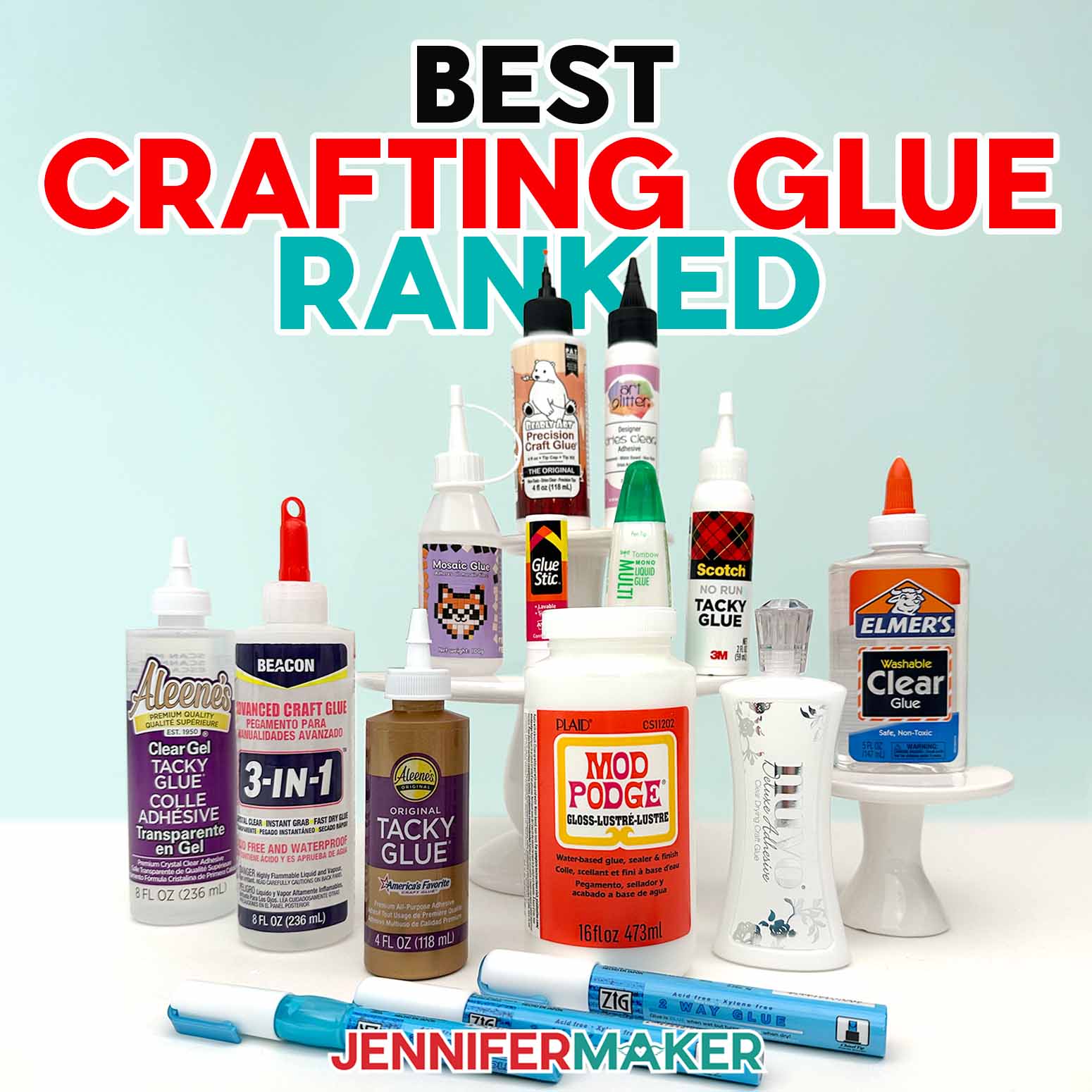
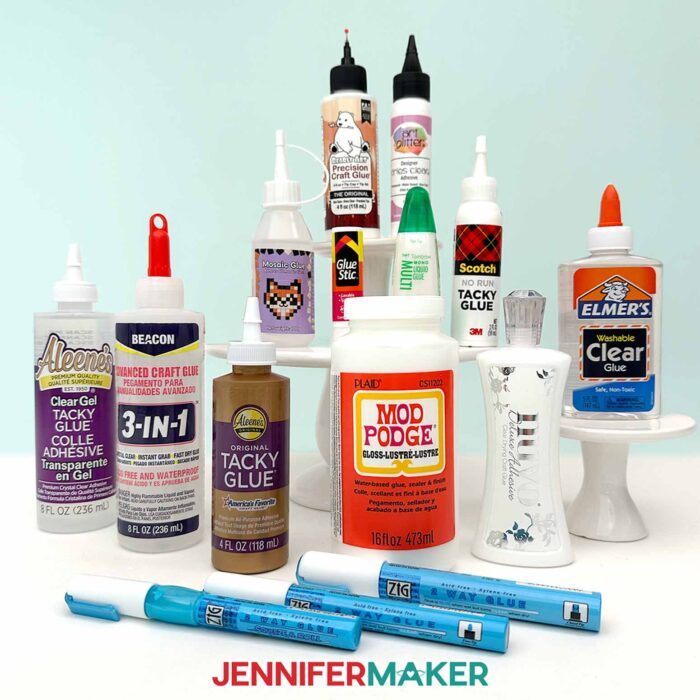
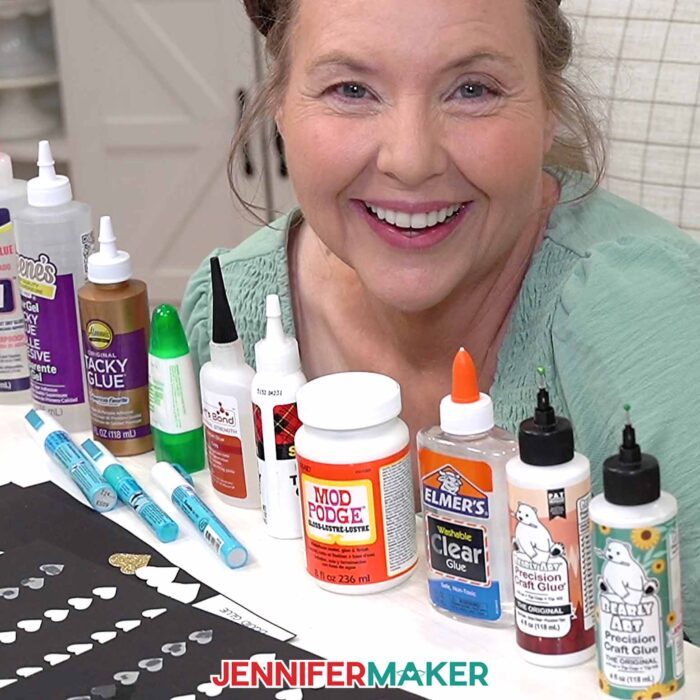
For this updated test, I compared thirteen popular craft glues side by side, including an older bottle of Bearly Art glue and three different sizes of Kuretake Zig Glue Pens, for a total of sixteen tests. None of the brands paid me to do this, so these are my own observations and results from my own testing.
During testing, I focused on the things that matter most for paper crafts:
- Control
- Precision
- Appearance After Drying
- Initial Grab and Adhesion
- Pressure Resistance
- Temperature Performance
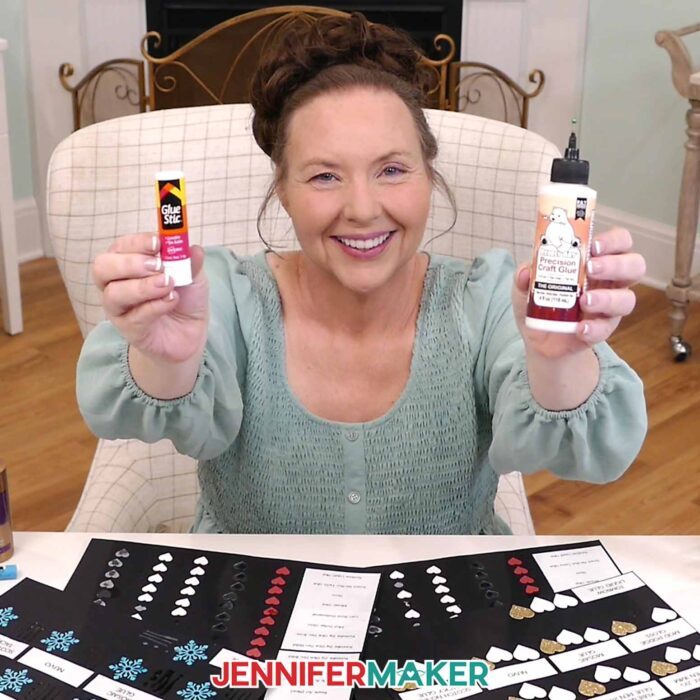
For each glue, I used the same basic testing techniques so the results were easier to compare. I made small lines and dots to test flow and control, glued detailed paper pieces to test precision, attached hearts made from different materials to check the dried appearance, and timed how long pieces stay movable before they grab the material. I also tested rolled cardstock pieces to see how each glue handled constant pressure, then checked separate sample cards after temperature changes.
To keep the tests as fair and useful as I could, I also used a few extra supplies. Some glues came with precision tips, narrow nozzles, broad applicators, or pen-style tips, so I tested the narrowest tip option available for control. For thicker glues or bottles that didn’t give me enough control, I used smaller test bottles or brushes to apply a more consistent amount. For glue sticks, I applied using the edges. I also kept a timer nearby, and created folded tabs on cut pieces so I could move or lift them cleanly.
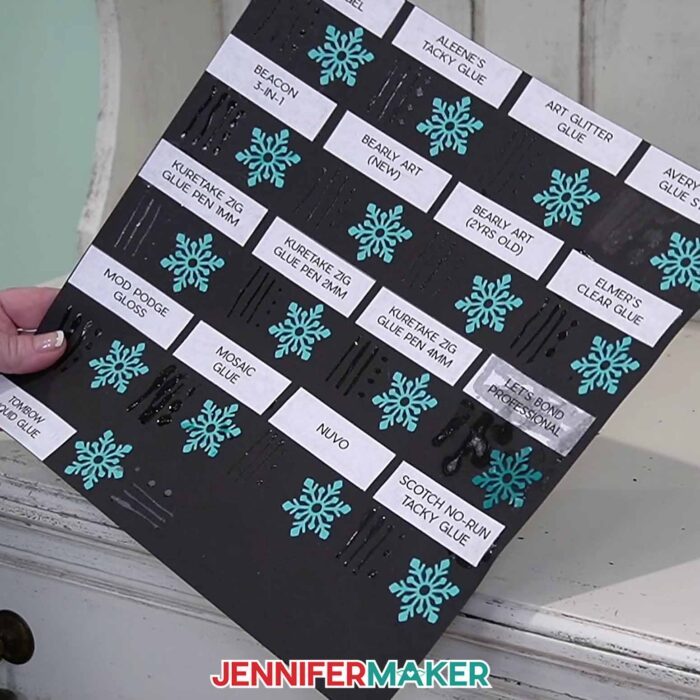
To make sure the test was suited for paper crafting, I used materials I work with all the time, including cardstock, vellum, acetate, photo paper, glitter cardstock, detailed Cricut cuts of cardstock, and rolled paper pieces. These materials helped me see how each glue behaved on flat paper, see-through layers, shiny surfaces, and dimensional seams.
I also paid close attention to safety while testing, and wore safety glasses, gloves, and an apron. I protected my work surface with parchment paper, and opened a window with a fan running for a well-ventilated area. Craft glues can have very different labels, ingredients, and precautions, so it’s always worth checking the bottle before using them. If a glue calls for extra ventilation or special handling, don’t skip those safety guidelines! I originally had Let’s Bond Professional Grade adhesive as part of my test too, but after a second look, I decided it wasn’t safe enough to recommend.
My Best Craft Glues PDF download has my official ranking list from this round of testing based on overall performance, as well as a quick reference guide to how each glue performed across the different testing categories. You can watch the video if you want to see how each glue behaved during the actual tests. Individual performance matters because some glues look great in one category but struggle in another. A glue can be neat but not very strong, strong but hard to control, or easy to use but not reliable enough for a project that needs to last.
What I Learned From Testing Craft Glues
The biggest thing I noticed is that easy to use doesn’t always mean easy to control. An Avery Permanent Glue Stic is quick and clean, but it isn’t made for tiny lines. Mosaic Glue is useful for projects with heavier materials like ceramic and wood, but it’s not suited for fine paper crafting.
A thick glue like Scotch No-Run Tacky Glue or Aleene’s Clear Gel may stay where you put it, but it can be hard to use on tiny cuts. And thin glues like Elmer’s Clear Glue may flow nicely, but they can spread before you’re ready and leave you with a sticky mess.
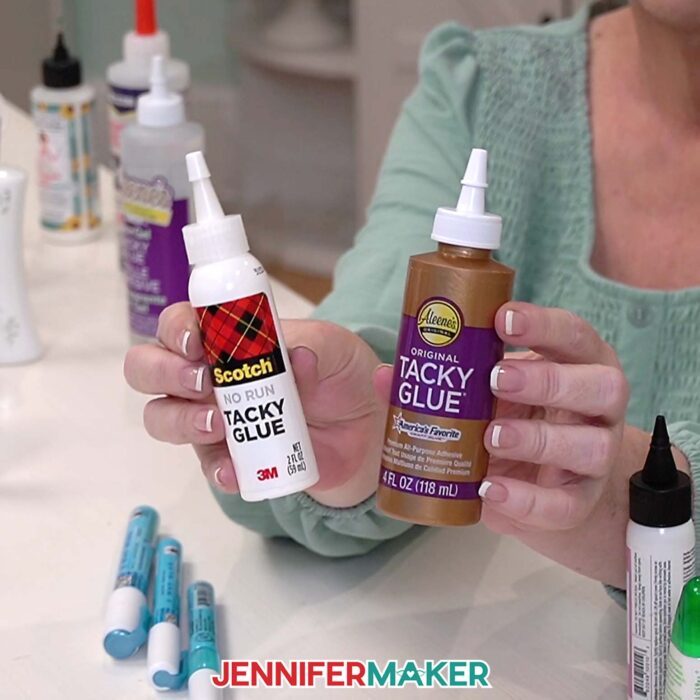
That’s why I tested more than just “does it stick?” I wanted to know which glue would help us make cleaner paper projects, which one could handle pressure, and which one still held after a long time or a temperature change.
The tests also reminded me that finished crafts don’t always stay in perfect conditions. A paper project might travel through the mail, sit near a sunny window, or be stored away for another season. So I wanted to see more than a fresh, flat test sheet. I wanted to know how these glues behaved when the material, pressure, and temperature changed.
How Did the Glues Perform?
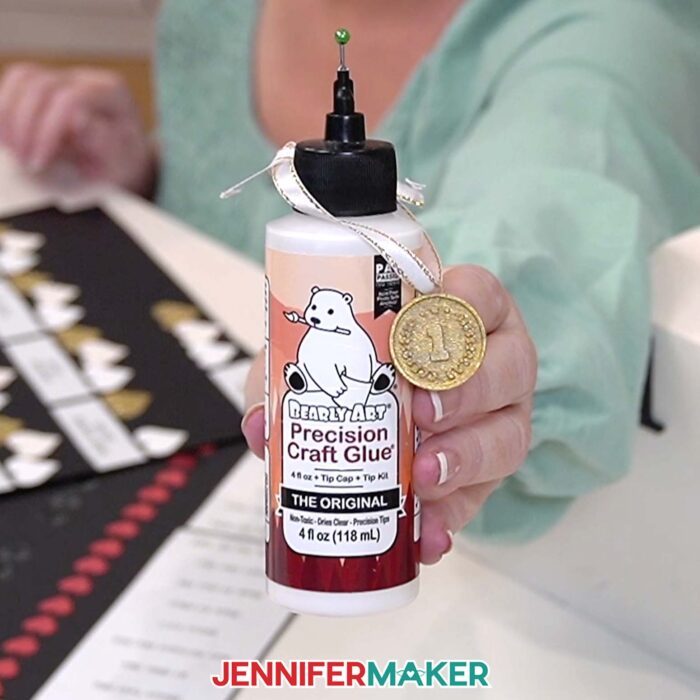
For detailed paper crafting, Bearly Art Glue was my best choice from this test. It gave me the best balance of control, clean appearance, reliable hold, and precise application. The fresh bottle performed the strongest overall, but I was also impressed that my two-year-old bottle of Bearly Art still held up surprisingly well in several tests. For an important project, though, I’d reach for the newer bottle.
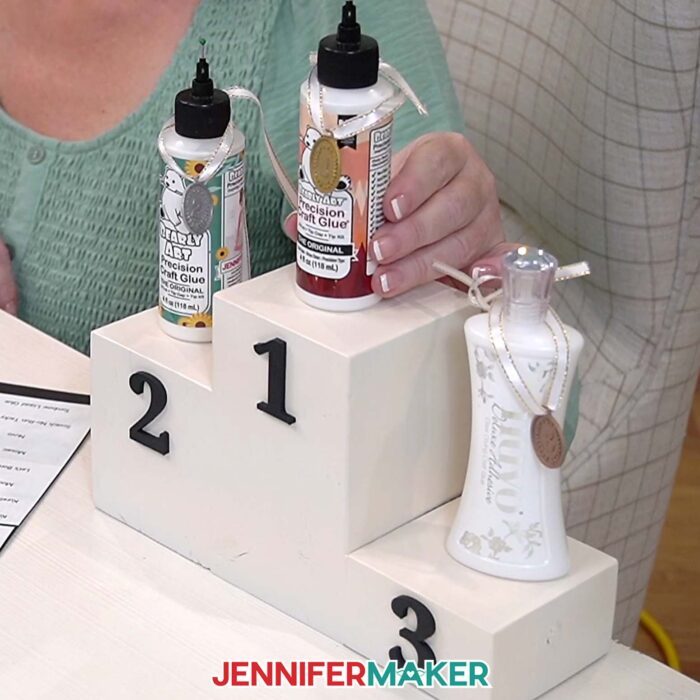
Nuvo Deluxe Adhesive was another strong performer, especially for flat paper layers, cards, and projects where a clean finished look matters. Tombow Liquid Glue was a useful general paper glue, too, and I liked having both a narrow tip and a broader applicator option.
Art Glitter Glue also performed pretty well for detailed work. It wasn’t quite as clean-looking as Bearly Art in my test, but it’s still a useful option if you’re comfortable controlling the amount. The Zig Glue Pens were helpful for tiny details because they let me draw the glue right where I needed it, though I did have to keep priming them as I worked.
Aleene’s Tacky Glue is useful if you need a thick glue with quick grab, but it doesn’t dry clear, so it’s not the best choice for highly detailed visible paper layers, projects that include acetate, or other projects where a clean dried appearance is critical.
Mod Podge is still a good choice for broad coverage, sealing, and decoupage, but I wouldn’t use it for tiny details. Avery Permanent Glue Stic is simple and neat for flat paper, but it wasn’t my best choice for dimensional pieces or paper projects that may be exposed to high temperature.
Beacon 3-in-1 can create a strong bond, but it’s harder to control and can get stringy. So I’d save it for specific uses where strength matters more than a spotless finish.
A few glues also reminded me why it’s so important to match the adhesive to the project. Mosaic Glue held better in some pressure and temperature tests than it did in the precision tests, which makes sense because it’s more of a specialty glue. Elmer’s Clear Glue gave more working time, but it spread and stayed slippery longer than I wanted for polished paper crafting.
So the overall ranking is helpful, but it isn’t the only thing to look at. If your project has a specific challenge, like tiny cuts, vellum, curled cardstock, or heat exposure, the category results may matter more than the final order.
How to Choose the Best Craft Glue for Your Project
Before you grab the closest bottle, think about what your project actually needs. Are you gluing tiny Cricut cuts? Covering larger areas? Working with vellum? Holding a curled paper seam closed? The right glue depends on the job.
If your project has lots of tiny details, start with control. A precision tip or narrow applicator can make a big difference because you can place a small amount of glue exactly where you need it. That helps prevent oozing, smearing, and those shiny glue spots that can show up around delicate pieces.
If you’re covering a bigger surface, precision may not matter as much. In that case, you’ll probably care more about smooth coverage, drying appearance, and whether the glue gives you enough working time to place the piece before it grabs. A glue that’s frustrating on a tiny snowflake might be just fine for a larger background layer.
If you’re working with vellum, acetate, or other see-through materials, don’t just look at whether the glue dries clear. Look at how it dries on that exact material. Some glues look clear but still leave outlines, shine, or cloudy areas. I always recommend testing on scraps first, especially if the glue will sit behind a transparent or lighter-colored piece.
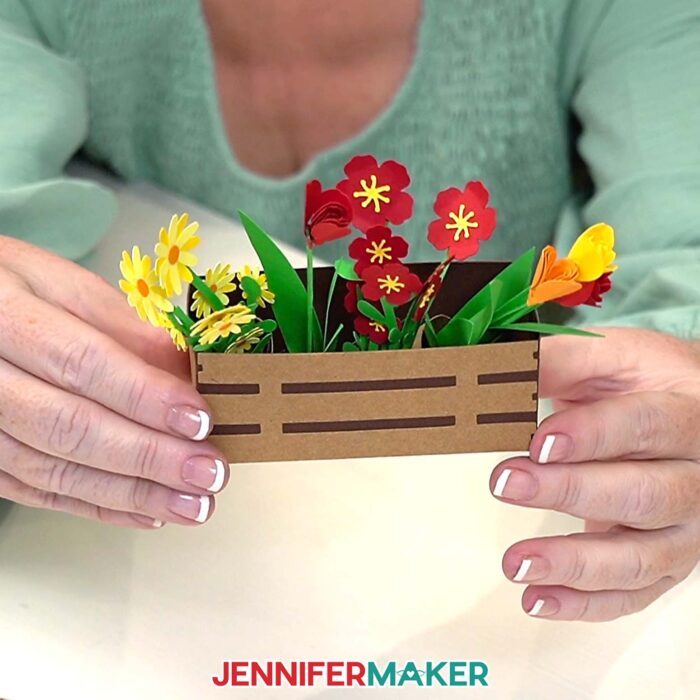
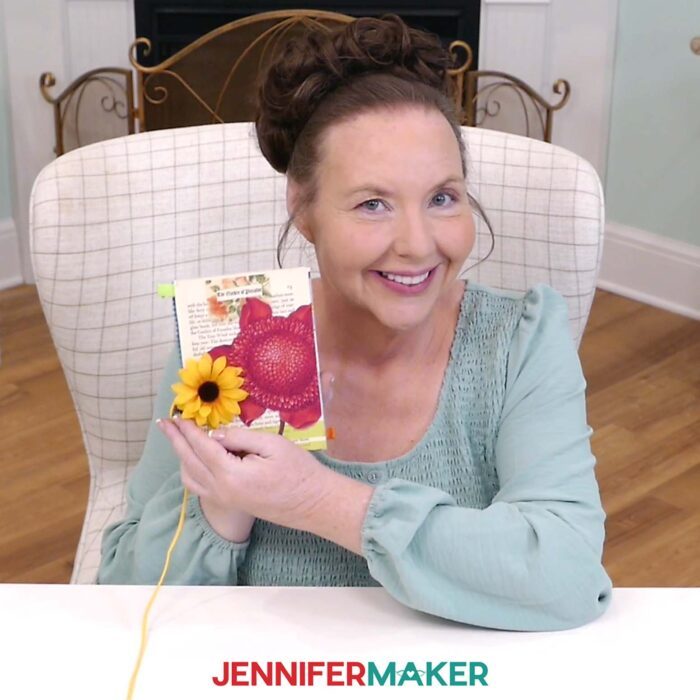
If your project has depth and dimension, think about resistance to pressure. Rolled flowers, curled cardstock, layered boxes, and folded seams all push back against the glue while it dries. A glue that works beautifully on a flat card may not be strong enough for a seam that wants to spring open.
And if your finished project might travel through the mail, sit in a warm room, or be stored for a long time, reliability matters. Temperature and time can change how well some adhesives hold. That doesn’t mean every project needs the strongest glue on the table, but it does mean you’ll want to match the glue to how the finished piece will be used.
My best advice is to choose glue by the problem you need it to solve:
- For tiny details, look for control and precise application.
- For large areas, look for smooth coverage.
- For vellum or acetate, look for a clean dried appearance.
- For dimensional pieces, look for a strong bond under pressure.
- For important keepsake projects, look for long-term reliability.
Watch the Full Video to See My Glue Test Step-by-Step
Watch the video to see the glue test in action, including my exact test methods, which popular glues struggled more than I expected, and what happened when the test pieces were placed in different temperatures.
You’ll also be able to see the little differences that are hard to explain in a ranking chart, like how fast a glue flows, whether it strings, how much a piece slides before it grabs, and what the glue looks like after drying.
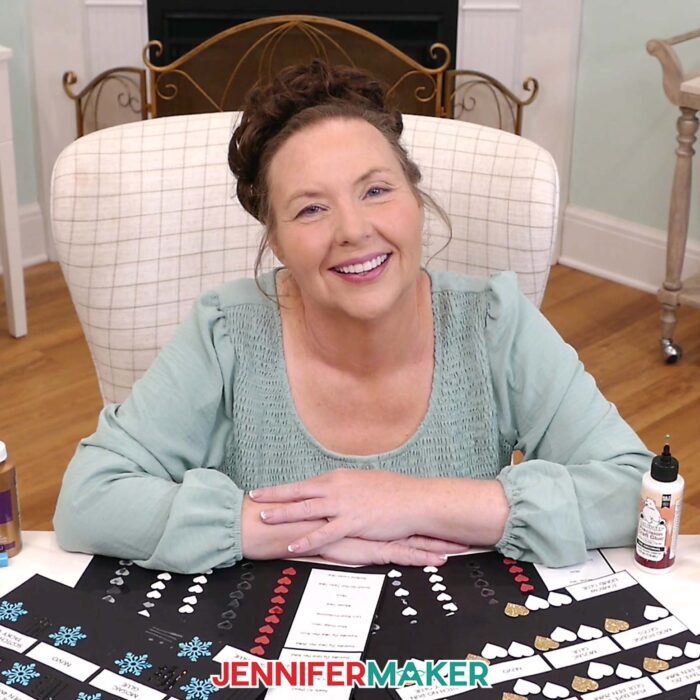
Plus, if you want to test the glues you use with the materials you work with most often, you can use the methods in my video as a roadmap to understand your own crafting materials better. If you’ve ever had a beautiful paper project go sideways because of glue, the test results will help you choose more confidently next time.
Materials for Testing Craft Glues
View my Amazon shopping list with the exact items I used.
- Bearly Art Precision Glue
- Beacon 3-in-1 Glue
- Mod Podge Gloss
- Art Glitter Glue
- Mosaic Glue
- Aleene’s Tacky Glue
- Aleene’s Clear Gel
- Scotch No-Run Tacky Glue
- Elmer’s Clear Glue
- Tombow Liquid Glue
- Avery Permanent Glue Stic
- Kuretake Zig Glue Pen Variety Pack
- Nuvo Deluxe Adhesive
- Disposable Nitrile Gloves
- Safety Goggles
- Apron (optional for protecting your clothes)
- Parchment Paper (for protecting your work surface)
- Paper Towels (optional for wiping excess glue)
- Scissors (for opening certain types of glue bottles)
- Fan (for ventilation)
- Single Use Paintbrush (for use with Mod Podge)
- Disposable Precision-Tip Glue Bottle (optional for some glues without precision-tip applicators)
- OPTIONAL: Digital Timer
- Design #854 (My free PNG file with testing details is available in my free library – get the password by filling out the form at the bottom of this page)
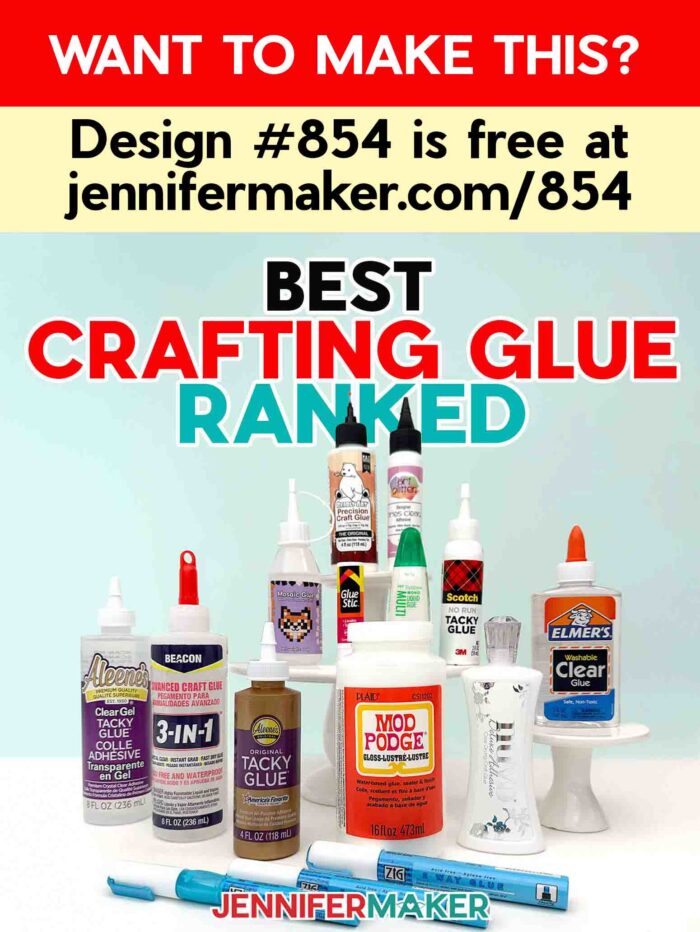
Learn More About the Best Craft Glues
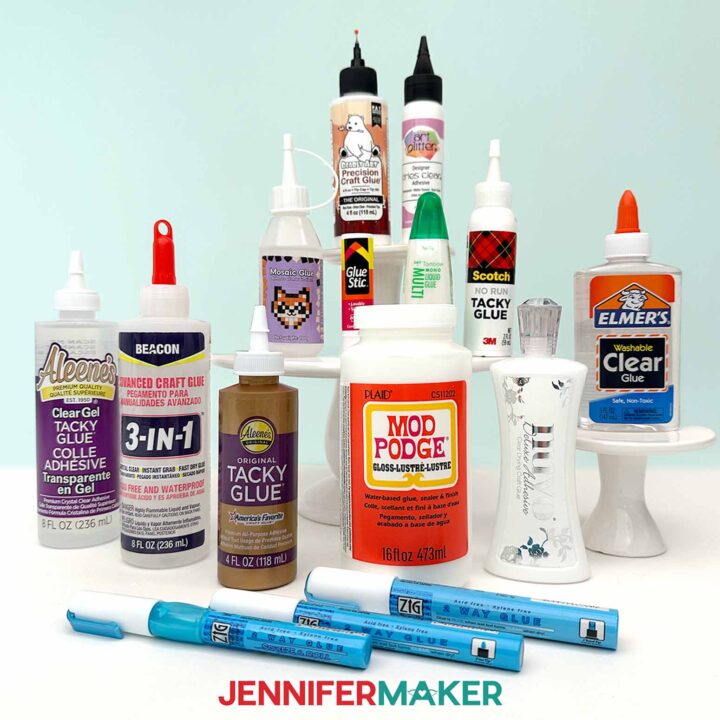
Best Craft Glues
Let’s learn about the best craft glues to use for your paper-crafting projects!
Materials
Tools
- Disposable Nitrile Gloves
- Safety Goggles
- Apron (optional for protecting your clothes)
- Parchment Paper (for protecting your work surface)
- Paper Towels (optional for wiping excess glue)
- Scissors (for opening certain types of glue bottles)
- Fan (for ventilation)
- Single Use Paintbrush (for use with Mod Podge)
- Disposable Precision-Tip Glue Bottle (optional for some glues without precision-tip applicators)
- OPTIONAL: Digital Timer
Instructions
For this project, I tested some of the most popular craft glues across several categories, including:
- applicator control
- precision
- initial adhesion (how long a piece can be moved before it’s set)
- constant pressure (how much strength is needed to secure the piece in place)
- appearance after drying
- safety (toxicity level, the need for personal protective equipment (PPE))
- temperature performance
- cost per ounce
Watch the full video above to see how we tested the glues!
The rankings in the testing categories below follow the overall rank without cost. Cost per ounce, ranked in the farthest right column, is still noted when it affects the practical value of a glue, but the primary order of the results reflects performance first.
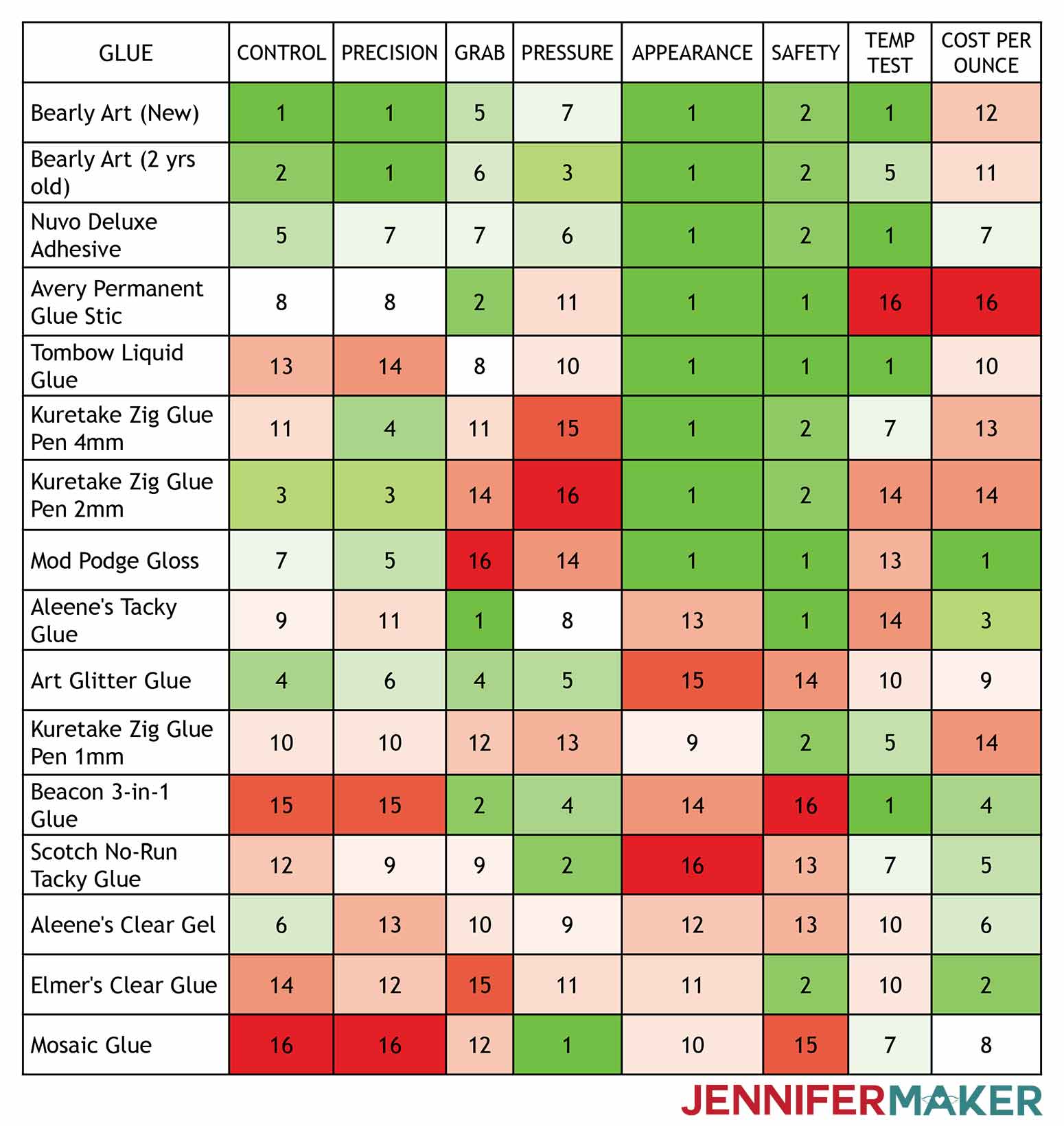
BEST CRAFT GLUE #1: BEARLY ART CRAFT GLUE (NEW)
Bearly Art ranks first overall in this list, both with and without cost included. It performs especially well in categories that are important for detailed paper crafting, including applicator control, precision, appearance, and temperature performance. It’s relatively safe with no Personal Protection Equipment (PPE) required, though safety glasses and gloves are recommended.
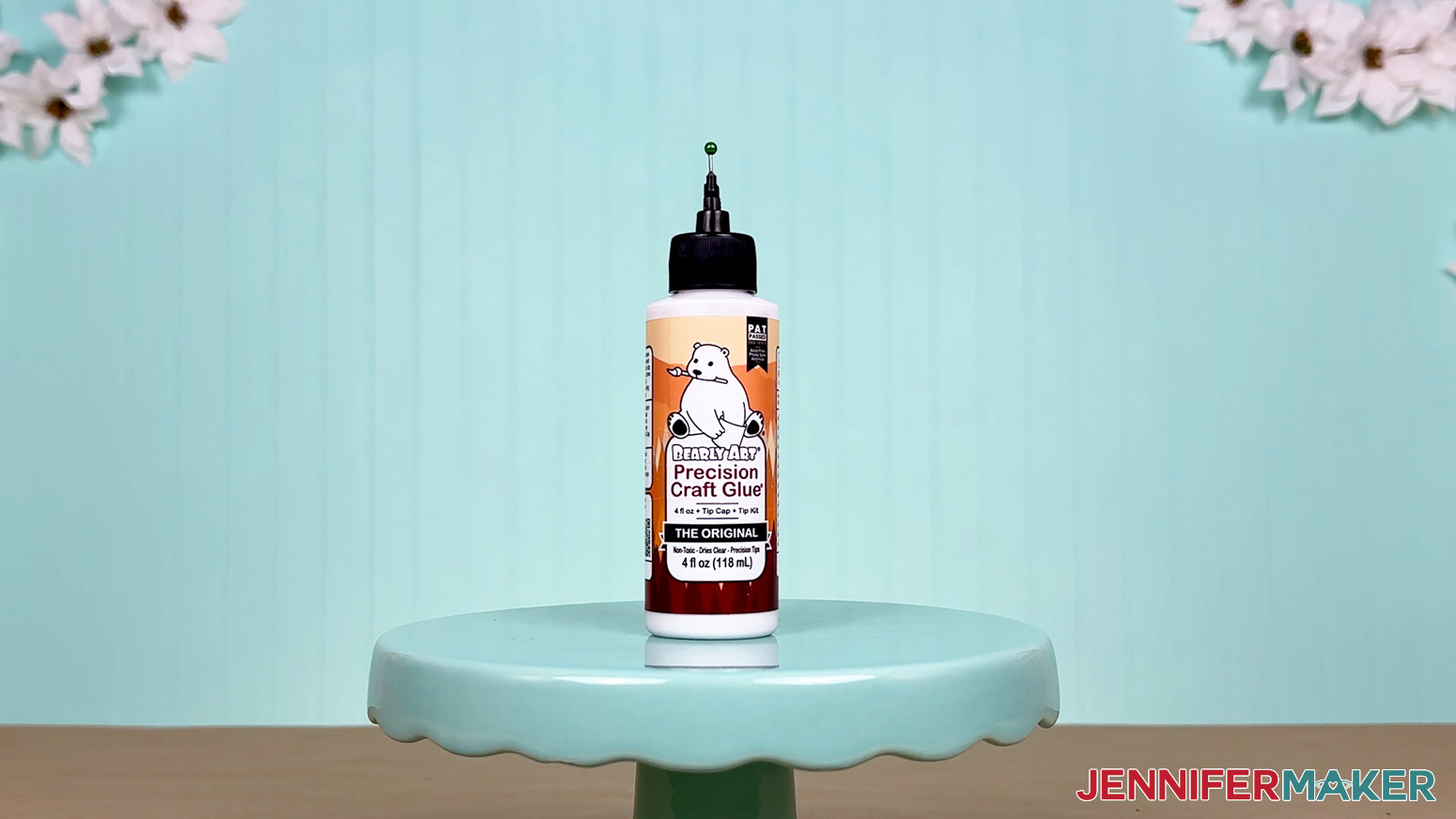
Of the glues tested, Bearly Art is one of the easiest to control. It creates consistent thin lines and small dots without excessive running, stringing, or flooding. This makes it one of the strongest options for delicate paper pieces and detailed cardstock projects.
The included precision tips are a major advantage because they allow you to control the amount of glue directly from the original bottle. This reduces the need to transfer the glue into a separate fine-tip applicator. Plus, it comes with a pin to insert into the tip when storing to prevent clogs.
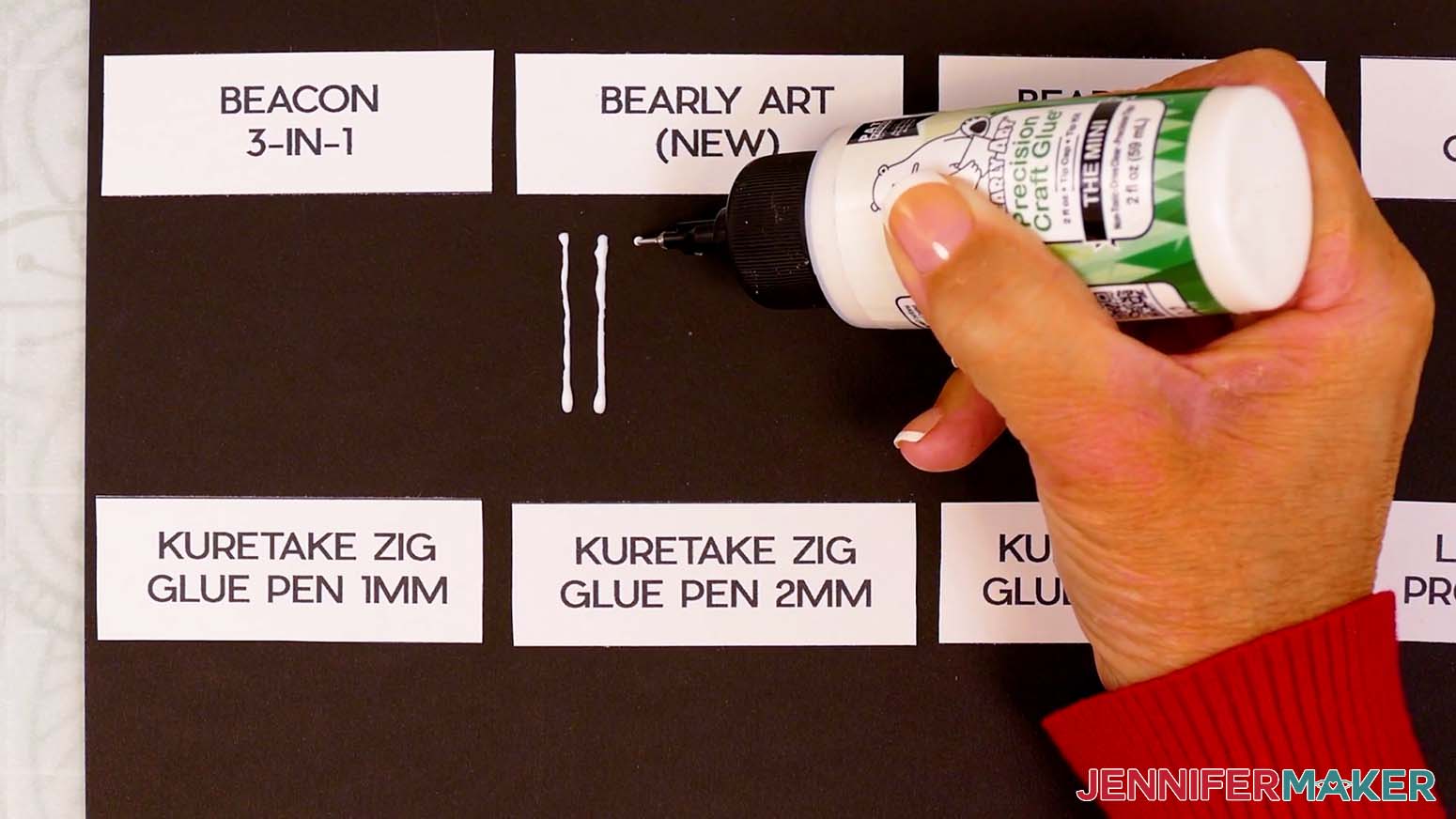
The main drawback is cost. Bearly Art comes in at a higher cost per ounce than several other glues, so it may not be the most economical choice for large surface coverage.
However, for detailed paper crafting, it offers the best overall balance of precision, appearance, and performance.
Best for: detailed cardstock projects, layered paper crafts, delicate Cricut cuts, shadow boxes, rolled flowers, and projects where clean glue application matters.
Not ideal for: large surface coverage where a lower-cost glue may be sufficient.
BEST CRAFT GLUE #2: BEARLY ART CRAFT GLUE (2 YEARS OLD)
The two-year-old Bearly Art ranks second overall, both with and without cost included. This is a notable result because it suggests that Bearly Art can remain effective over time when stored well.
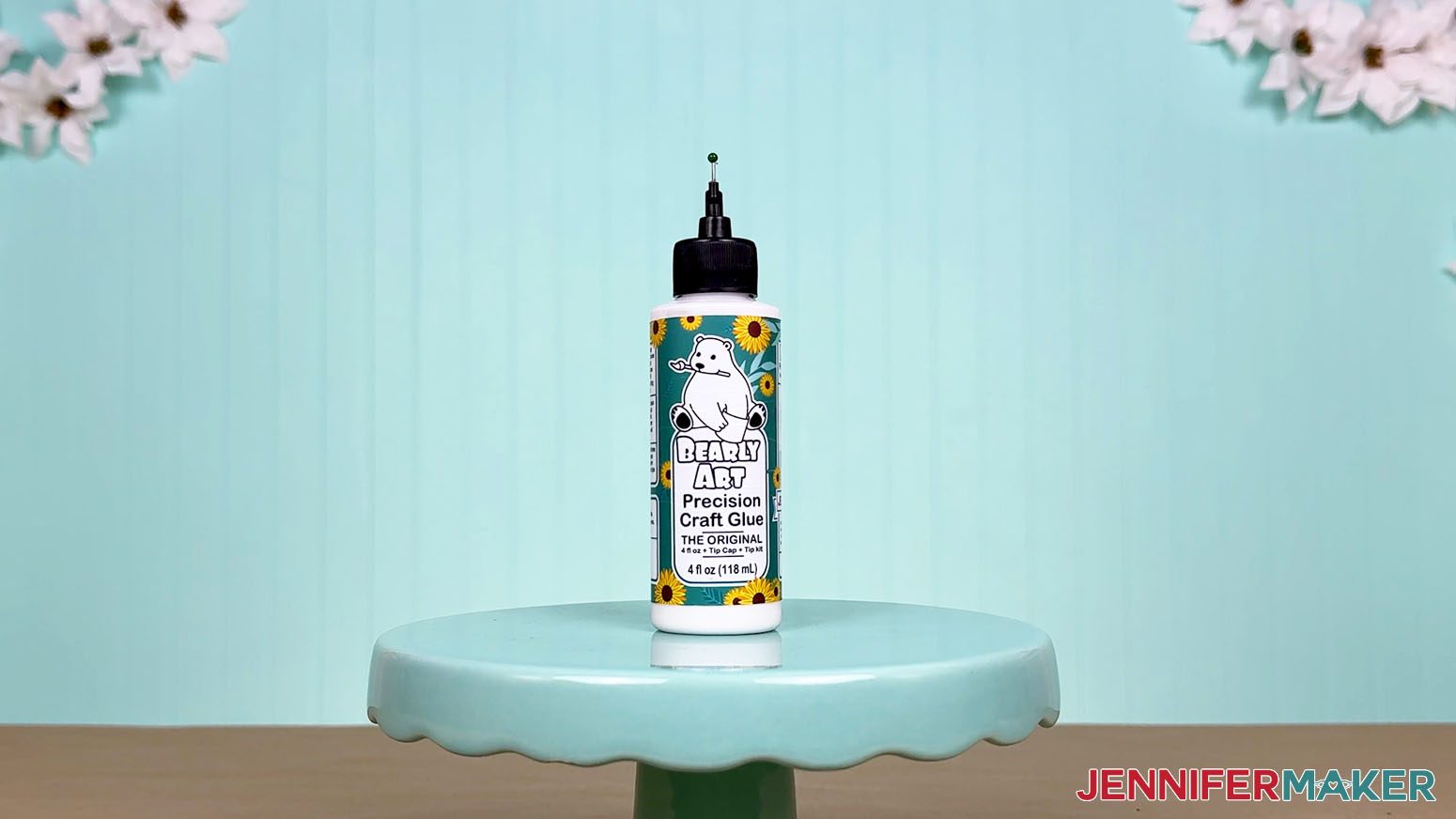
The older bottle performs strongly in precision, appearance, and applicator control. It matches the new bottle in several key areas and performs especially well in the constant pressure category, keeping rolled cardstock pieces closed well.
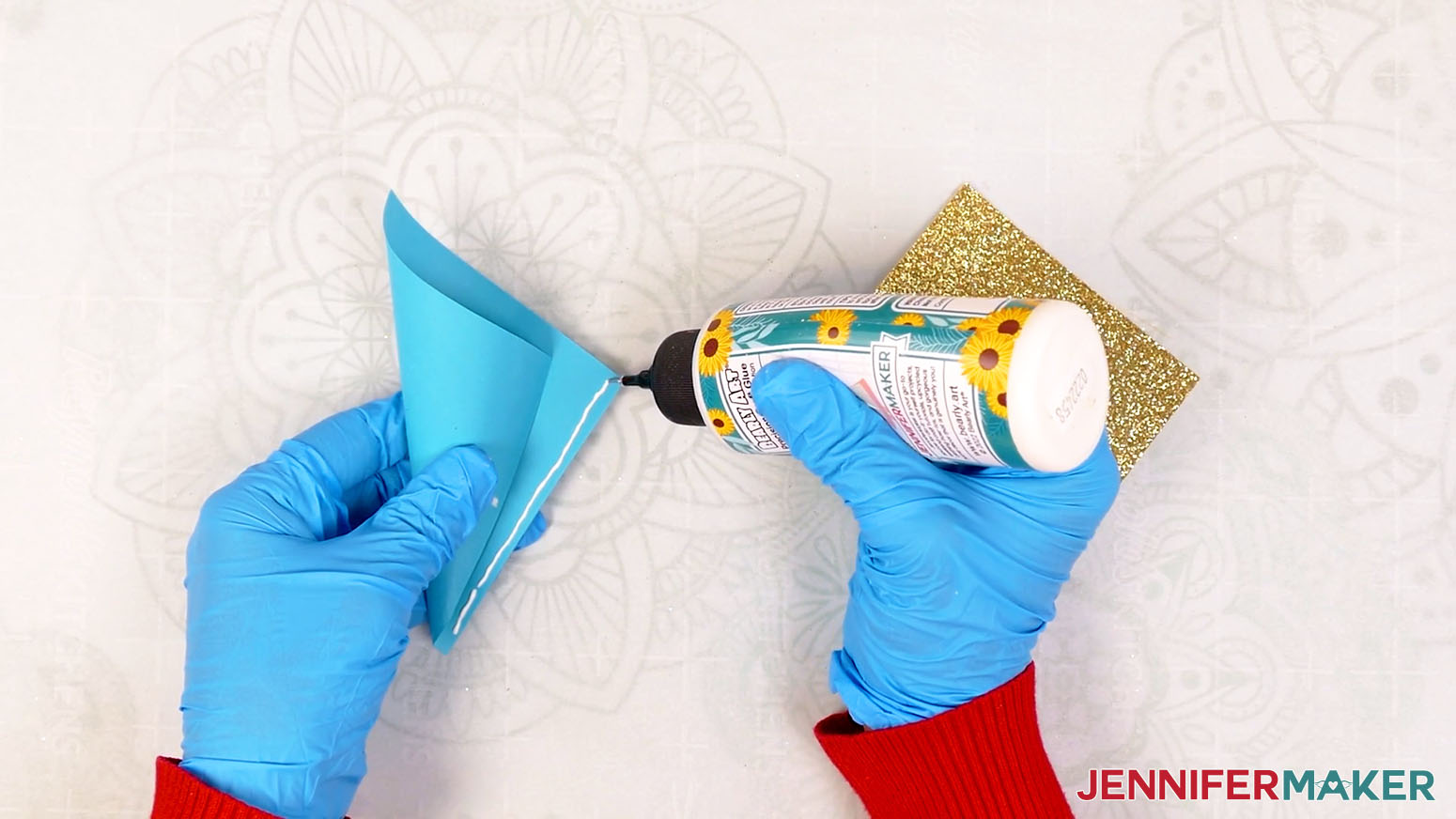
The main difference is temperature performance. The two-year-old bottle does not rank as highly as the new bottle in the temperature test, which may indicate that age or storage conditions can affect performance in more demanding environments.
If you already have an older bottle of Bearly Art, it may still be useful for many paper projects. For projects that need the most reliable temperature performance, a newer bottle may be the safer option.
Best for: precision paper crafting when the bottle has been stored well.
Not ideal for: heat-sensitive or long-term projects if the glue is old or storage conditions are unknown.
BEST CRAFT GLUE #3: NUVO DELUXE ADHESIVE
Nuvo Deluxe Adhesive ranks third overall and is one of the strongest all-around liquid glues on this list. It performs especially well in appearance, safety, and temperature testing, making it a good option for paper crafts where a clean finished result is important. This is a relatively safe glue with no PPE required, though safety glasses and gloves are recommended, as well as an apron to protect your clothes.
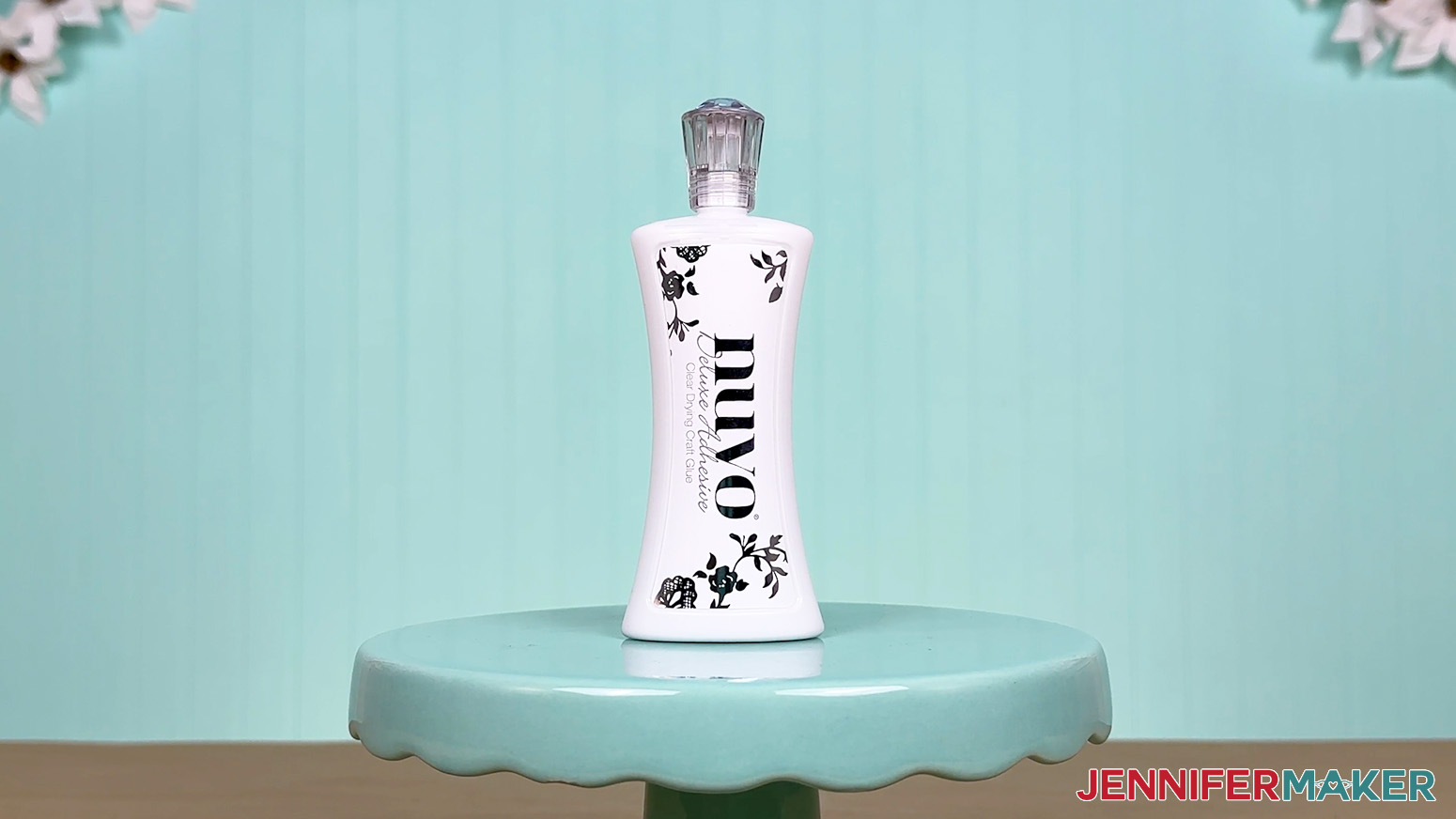
This glue handles flat cardstock layers well and is easier to control than some thicker, runnier, or stringier glues. It is not one of the strongest options for fast initial grab or pieces under constant pressure, so it may not be the best choice for rolled or springy cardstock shapes.
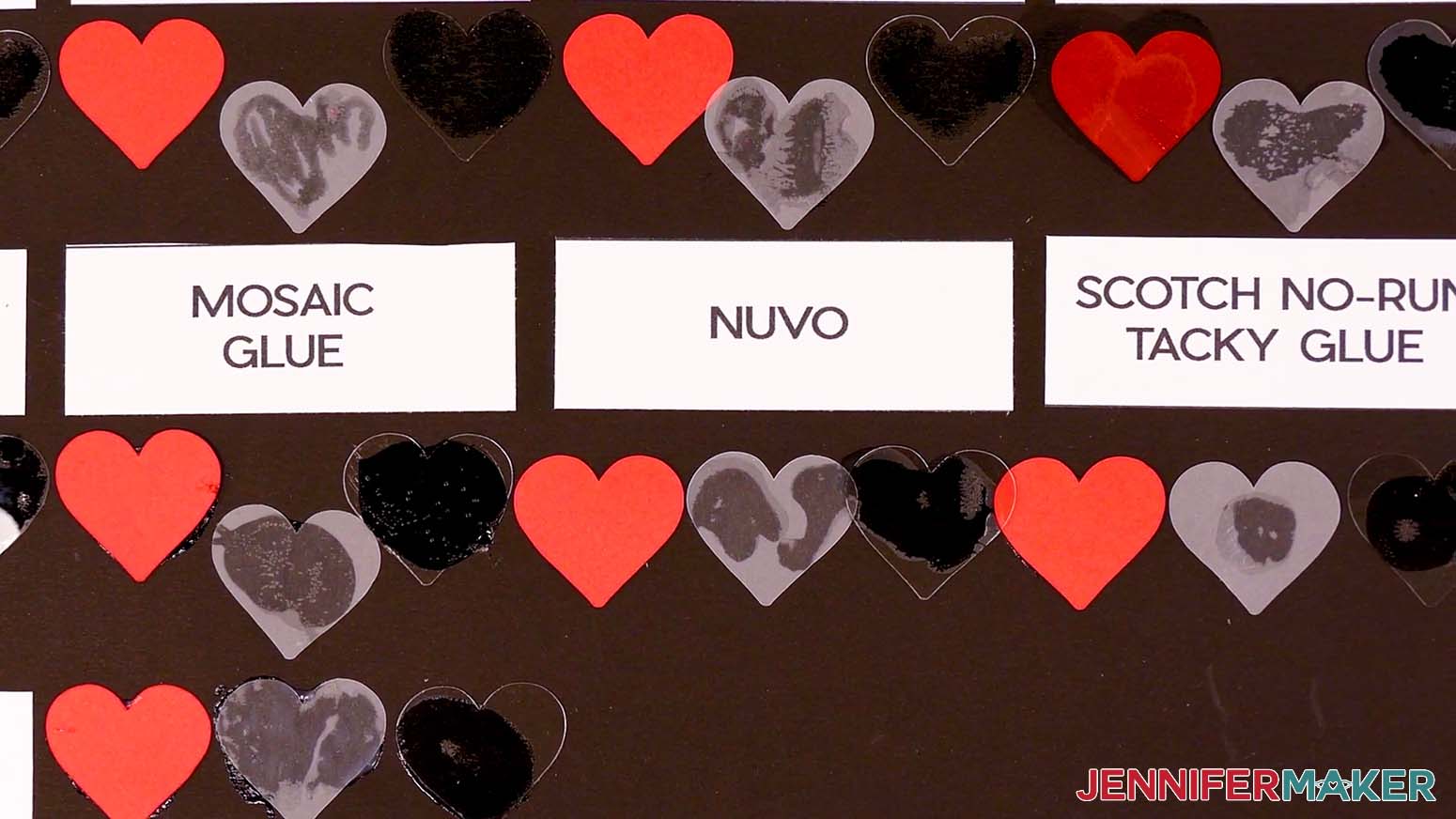
For cards, flat paper layers, and general cardstock projects, Nuvo offers a strong balance of clean appearance and controlled application.
Best for: cardmaking, cardstock layers, acetate accents, and paper projects where clean drying and controlled application are important.
Not ideal for: rolled shapes or pieces under pressure that need a very fast grab.
BEST CRAFT GLUE #4: AVERY PERMANENT GLUE STICK
Avery Permanent Glue Stick ranks fourth overall without cost, though it drops when cost per ounce is included. Glue sticks can seem inexpensive at purchase, but they may cost more per ounce than larger bottles of liquid glue.
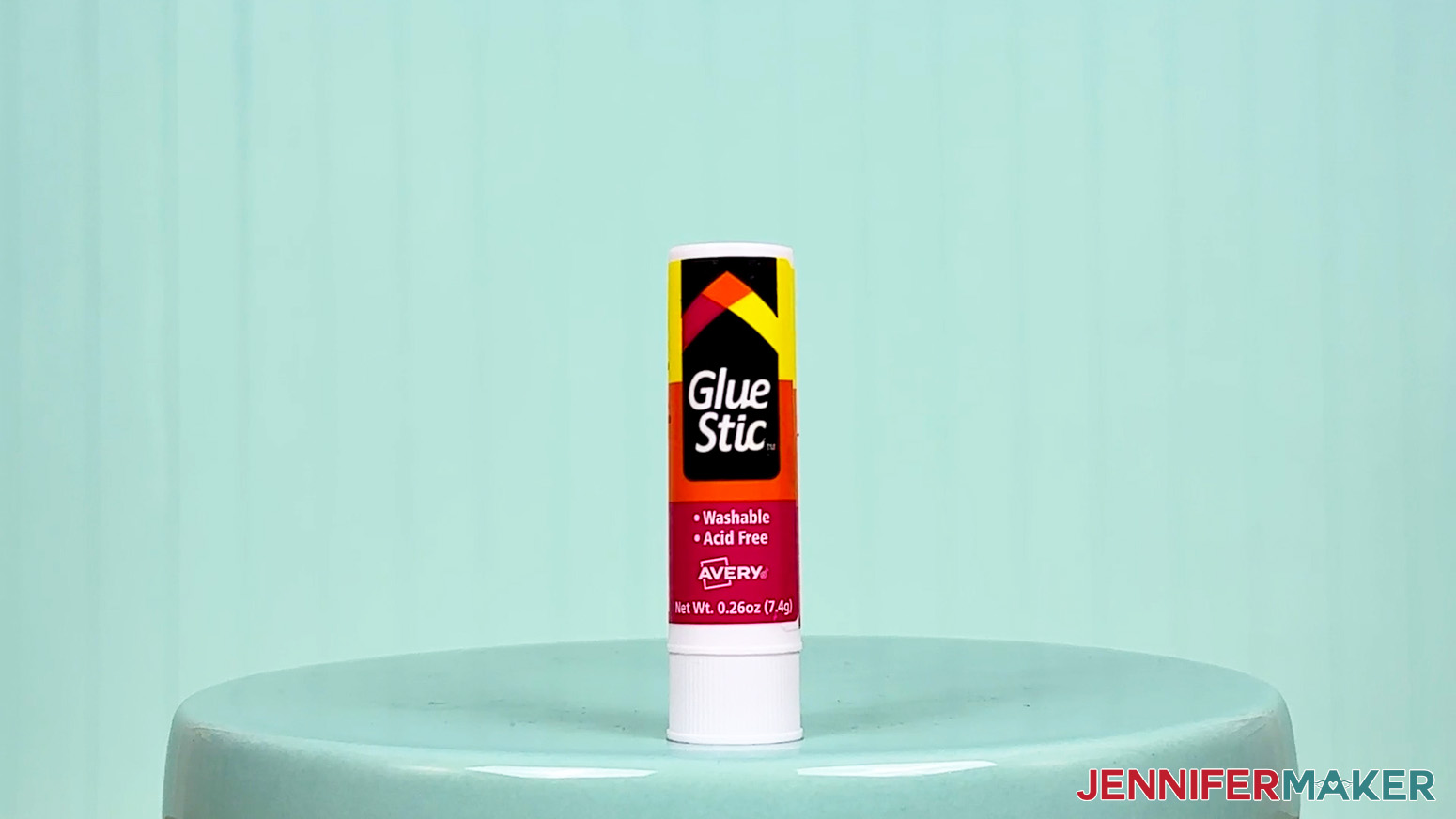
This glue performs well in safety (no PPE required), appearance, and initial adhesion. It is simple to use, low-mess, and useful for flat paper projects that do not need liquid glue or fine-detail application.
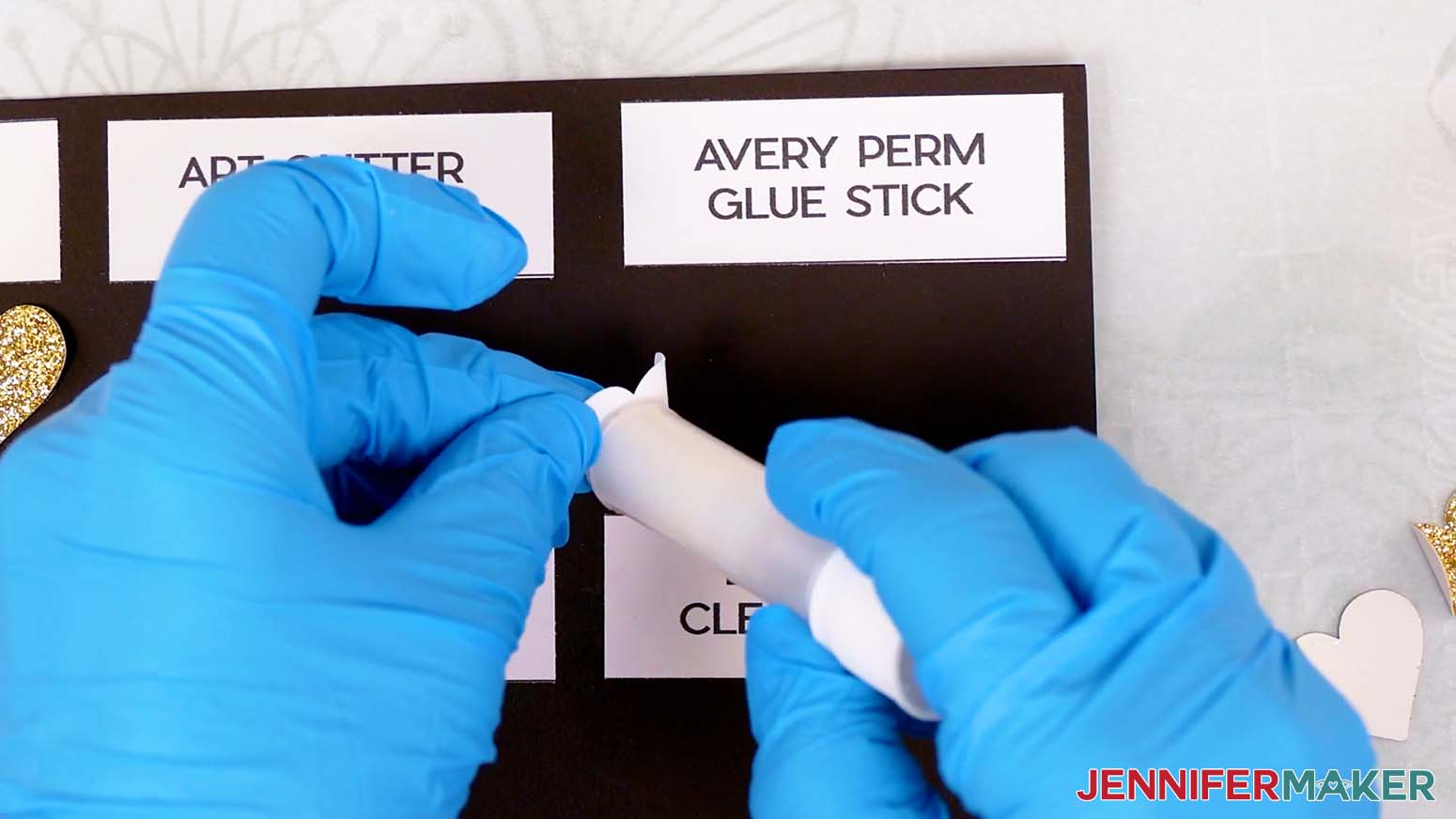
Its weaker results are in constant pressure and temperature testing. It is not the best choice for rolled cardstock, three-dimensional paper projects, glitter cardstock, or items that may be stored in warm conditions.
Best for: flat paper projects, kids’ crafts, quick mockups, scrap paper, and low-mess crafting.
Not ideal for: dimensional cardstock, glitter cardstock, hot environments, or projects that need strong, long-term hold.
BEST CRAFT GLUE #5: TOMBOW LIQUID GLUE
Tombow Liquid Glue ties for fourth overall without cost and ranks fifth when cost is included. It performs well in safety (no PPE required), appearance, and temperature testing, making it a solid general-purpose paper glue.
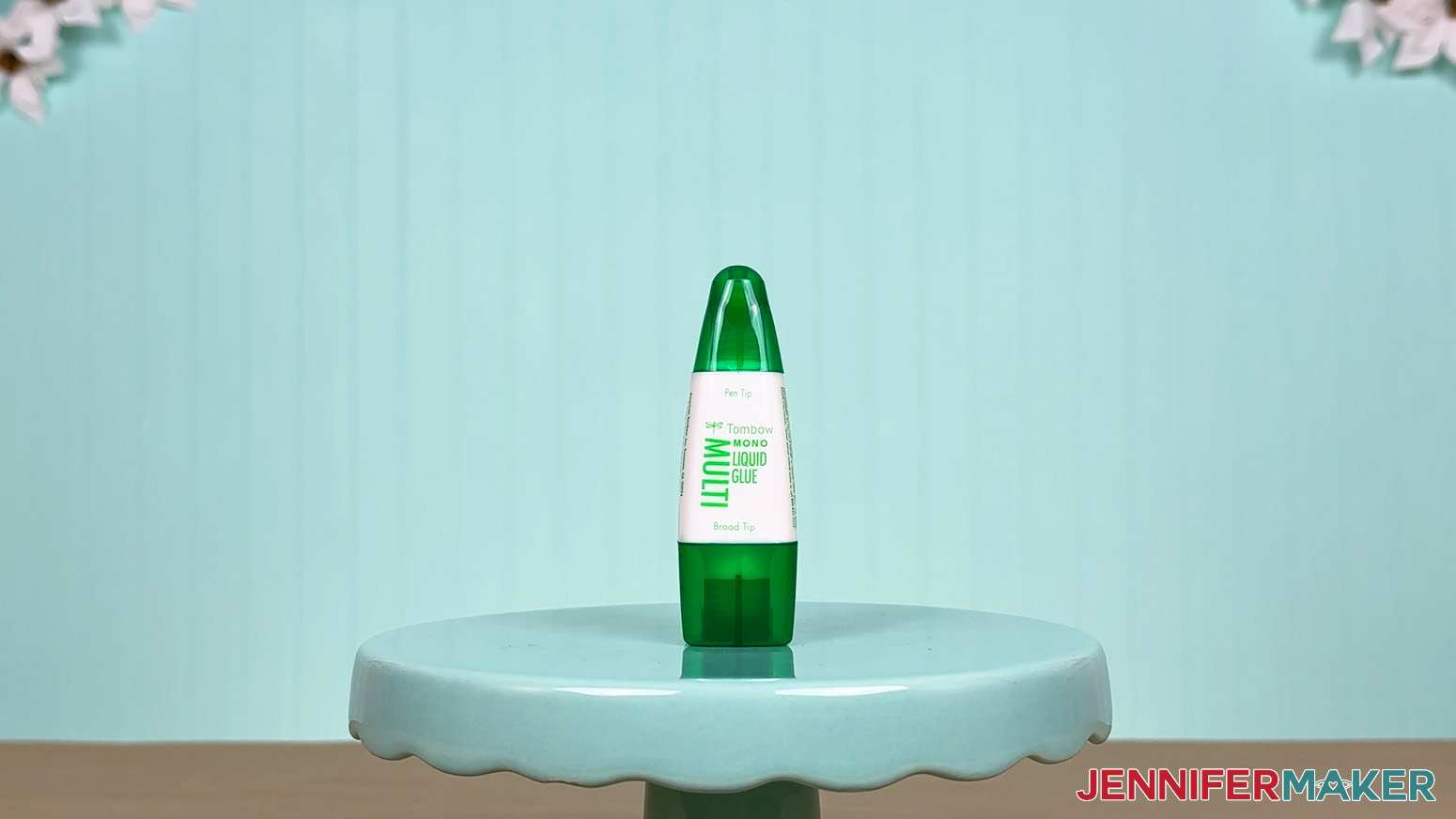
One useful feature is its dual-tip applicator. Tombow includes both a narrow tip for smaller areas and a broader applicator for larger surfaces. This can make it more flexible than a single-tip glue bottle, especially when you are switching between small paper details and larger cardstock layers in the same project.
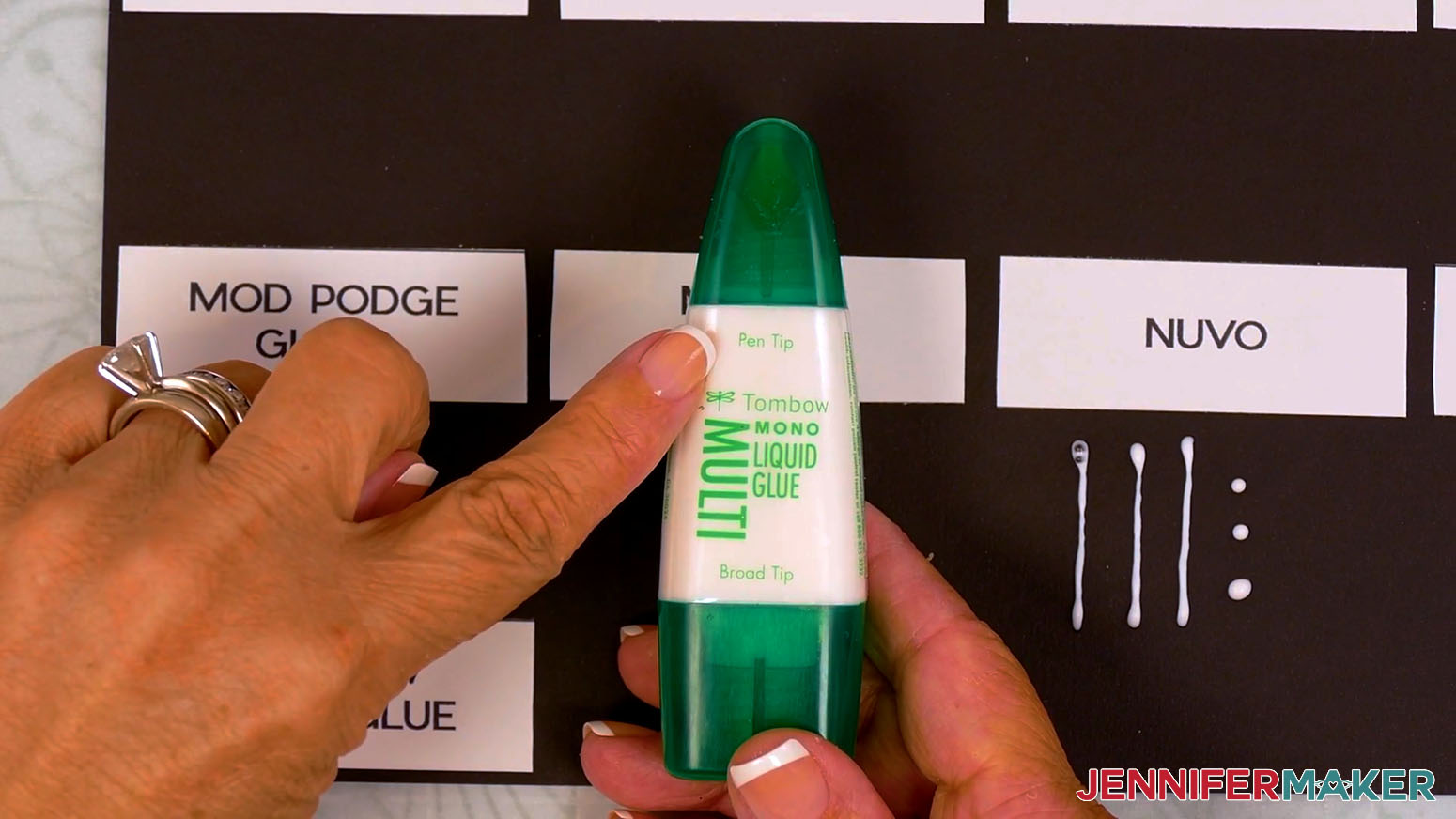
The narrow applicator tip does not perform as cleanly as the highest-ranked precision glues. It is not the easiest option for very small lines or delicate paper cuts. However, its clean appearance and temperature performance help it rank well overall.
Tombow remains a useful choice for general cardstock and paper crafting, especially when you want one glue with both fine and broad application options. It is not the top performer for fine precision work, but it offers good versatility.
Best for: general cardmaking, paper layers, projects where a dual-tip applicator is useful.
Not ideal for: ultra-delicate cuts or projects where the cleanest fine-tip precision is required.
BEST CRAFT GLUE #6: KURETAKE ZIG GLUE PEN 4MM
The Kuretake Zig Glue Pen 4mm ranks sixth overall without cost and seventh with cost, making it the highest-ranked Zig glue pen in this test. Its strongest areas are precision and appearance, and it’s relatively safe with no PPE required, though safety glasses and gloves are recommended.
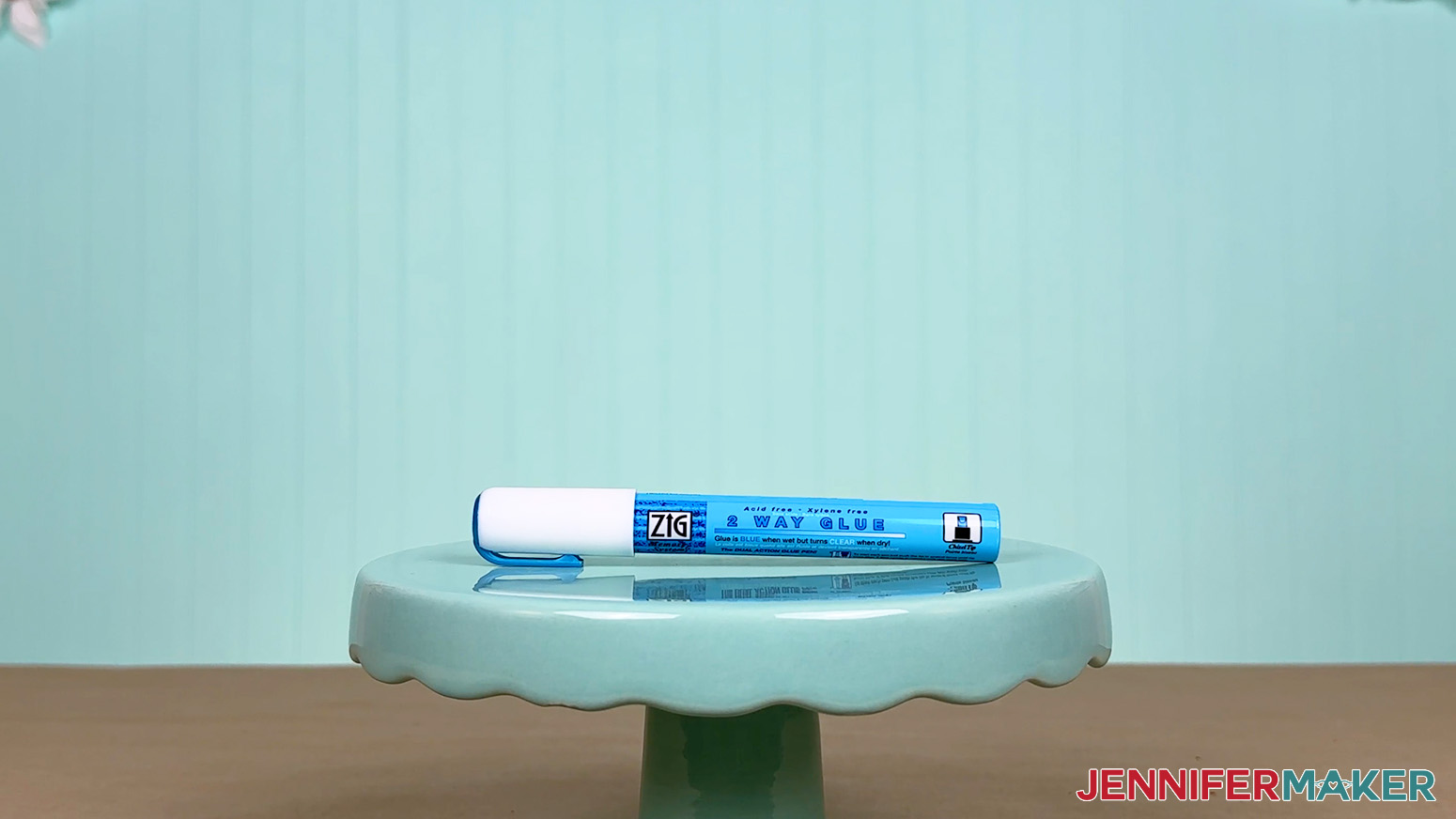
The pen-style applicator lets you draw adhesive onto narrow areas instead of squeezing it from a bottle. This is helpful for controlled placement, but it does require priming. Like a paint pen, the tip must be pressed down to start the glue flow and may need to be pressed again during use.
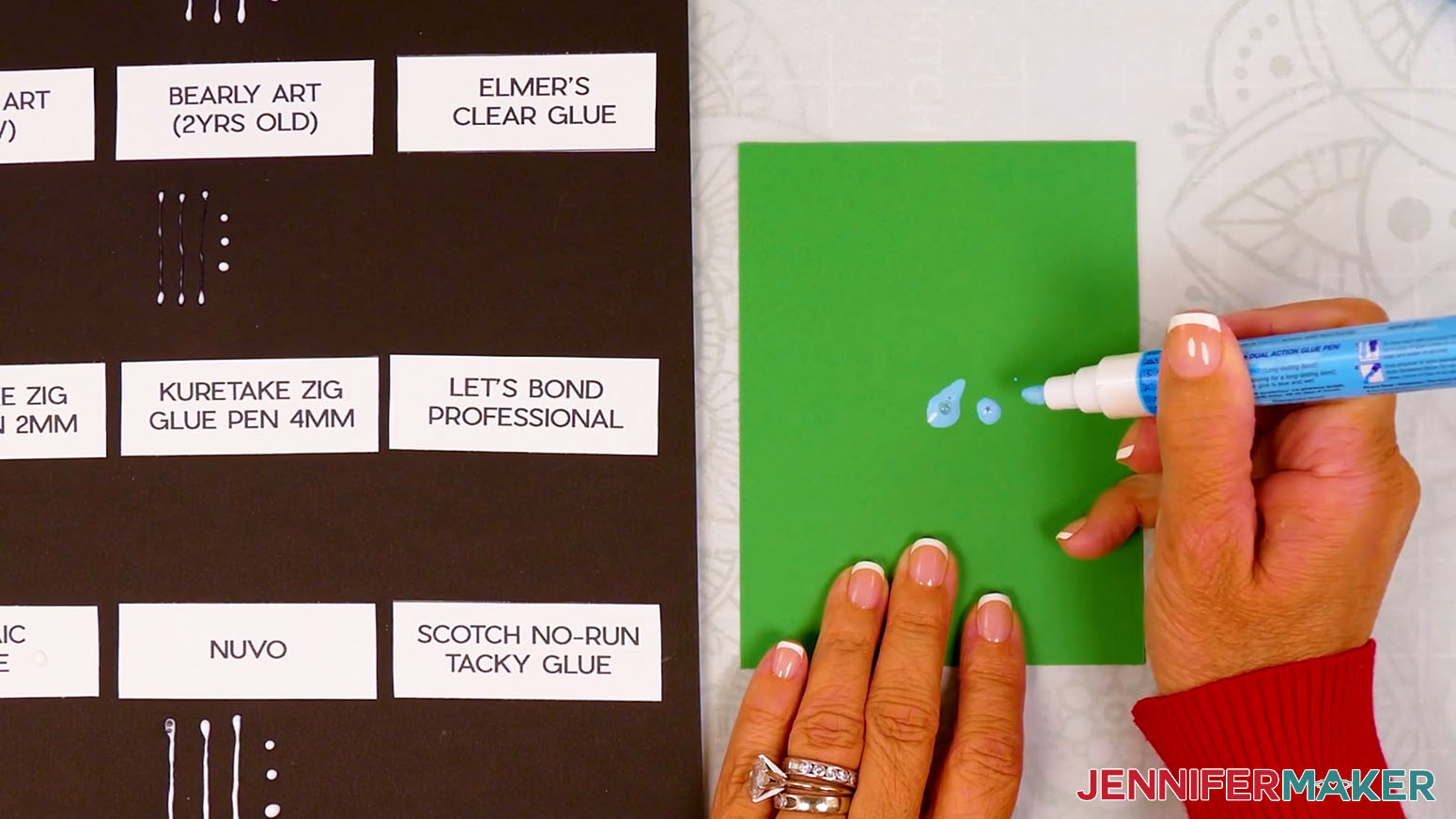
The 4mm pen works best as a controlled detail adhesive, not as a primary structural glue. It is less practical for rolled cardstock, fast assembly, or projects where frequent priming would slow down the process.
Best for: small paper pieces, narrow adhesive areas, scrapbooking, and controlled application.
Not ideal for: rolled cardstock, fast assembly, or projects where frequent priming would slow down the process.
BEST CRAFT GLUE #7: KURETAKE ZIG GLUE PEN 2MM
The Kuretake Zig Glue Pen 2mm ranks seventh overall without cost and ninth with cost. It performs well in applicator control and precision, which makes sense for a fine-tip glue pen.
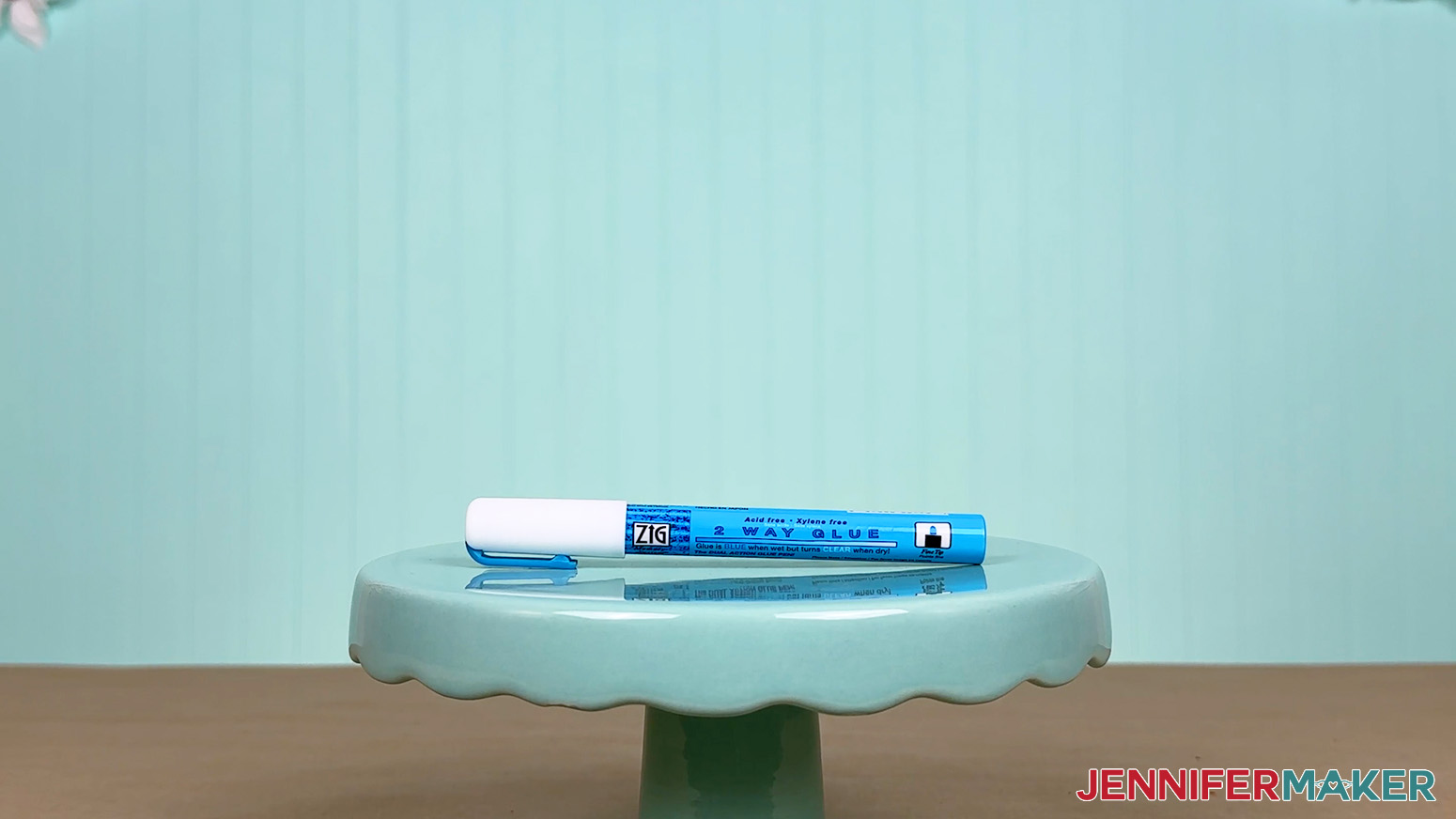
The 2mm tip is useful for small tabs, thin paper pieces, and detailed embellishments where a standard glue bottle may apply too much adhesive. Plus, it’s completely safe and non-toxic, with no PPE required for usage.
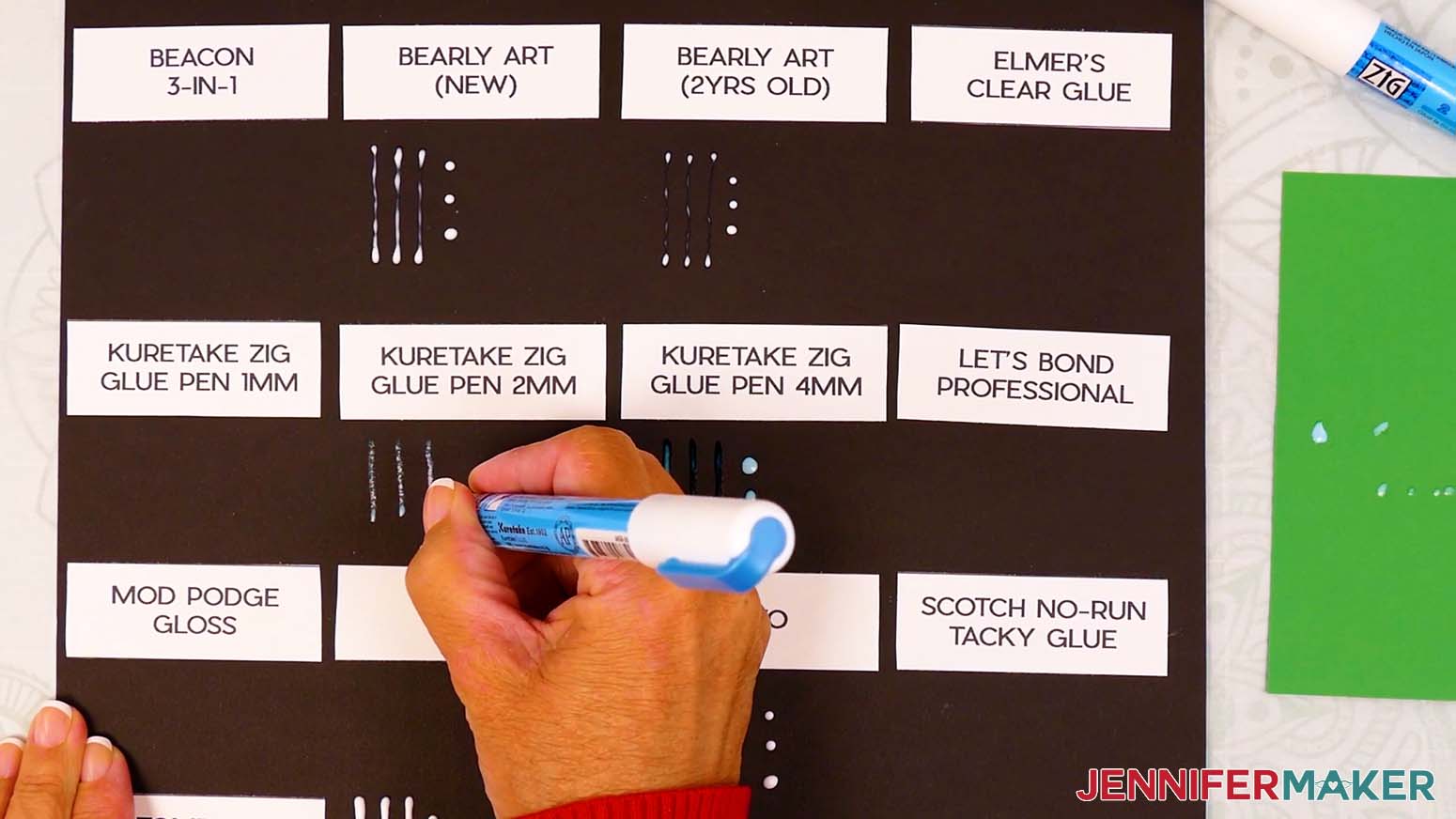
However, its lower performance in initial adhesion, constant pressure, temperature testing, and cost makes it better as a detail adhesive than a main assembly glue. Use it when precise placement matters more than strength, speed, or heat resistance.
Best for: tiny paper details, small tabs, thin lines, and scrapbooking-style adhesive placement.
Not ideal for: structural paper projects, rolled cones, glitter cardstock pressure tests, or warm conditions.
BEST CRAFT GLUE #8: MOD PODGE GLOSS
Mod Podge Gloss ranks eighth overall without cost, but rises to fourth when cost is included. It has the best cost-per-ounce ranking in the test, making it the strongest value option for larger coverage areas. In terms of safety, it ranks near the top, with a non-toxic formula and no PPE required.
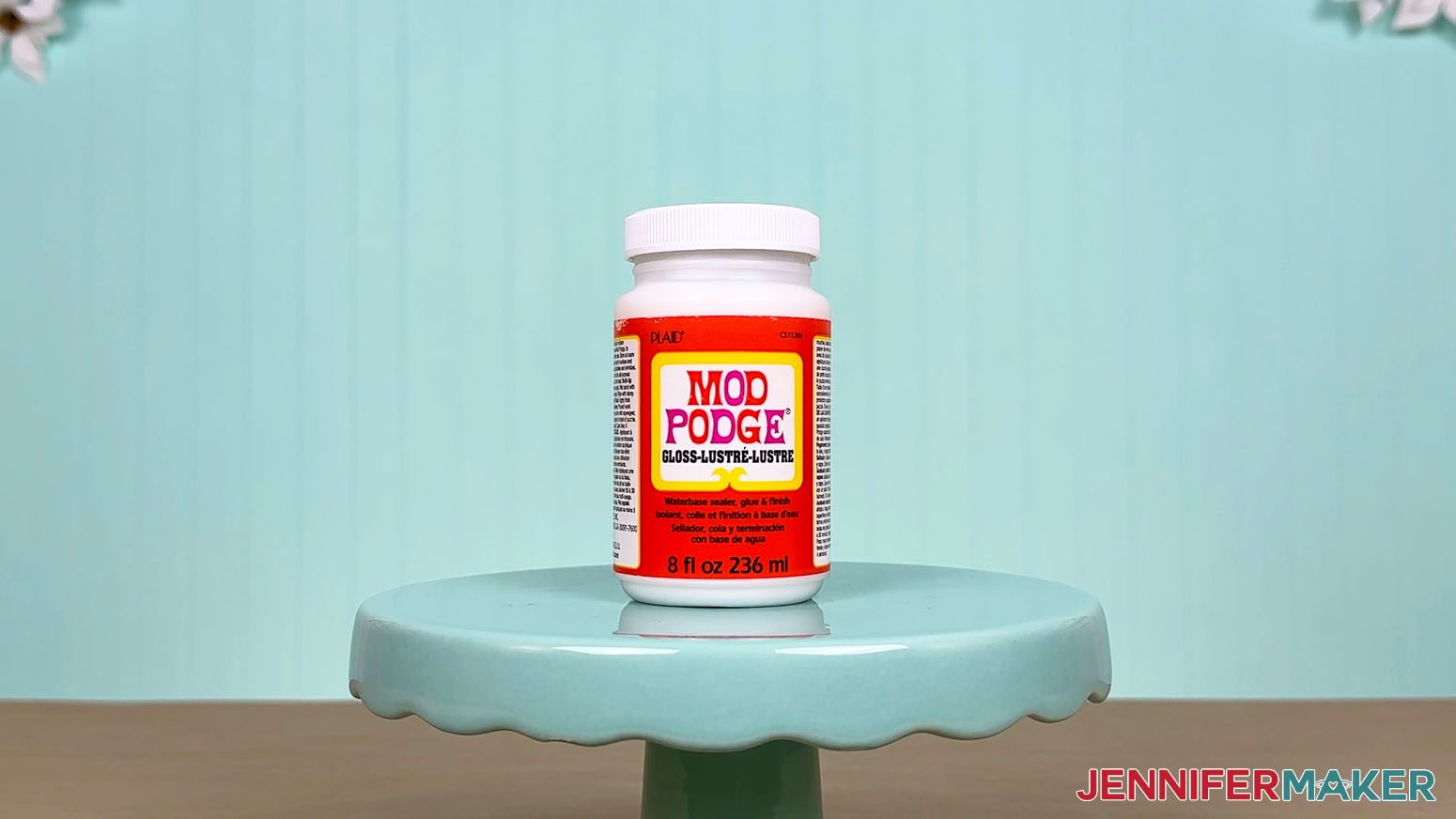
Mod Podge is different from the precision glues in this comparison because it can function as a glue, sealer, and finish. It is most useful when you need to cover a larger area, seal a surface, or complete a decoupage-style project.
It’s applied with a fresh craft paintbrush each time rather than being transferred into a squeeze bottle. This application method works well for the type of product it is, but it naturally creates a wider glue area than a precision-tip adhesive.
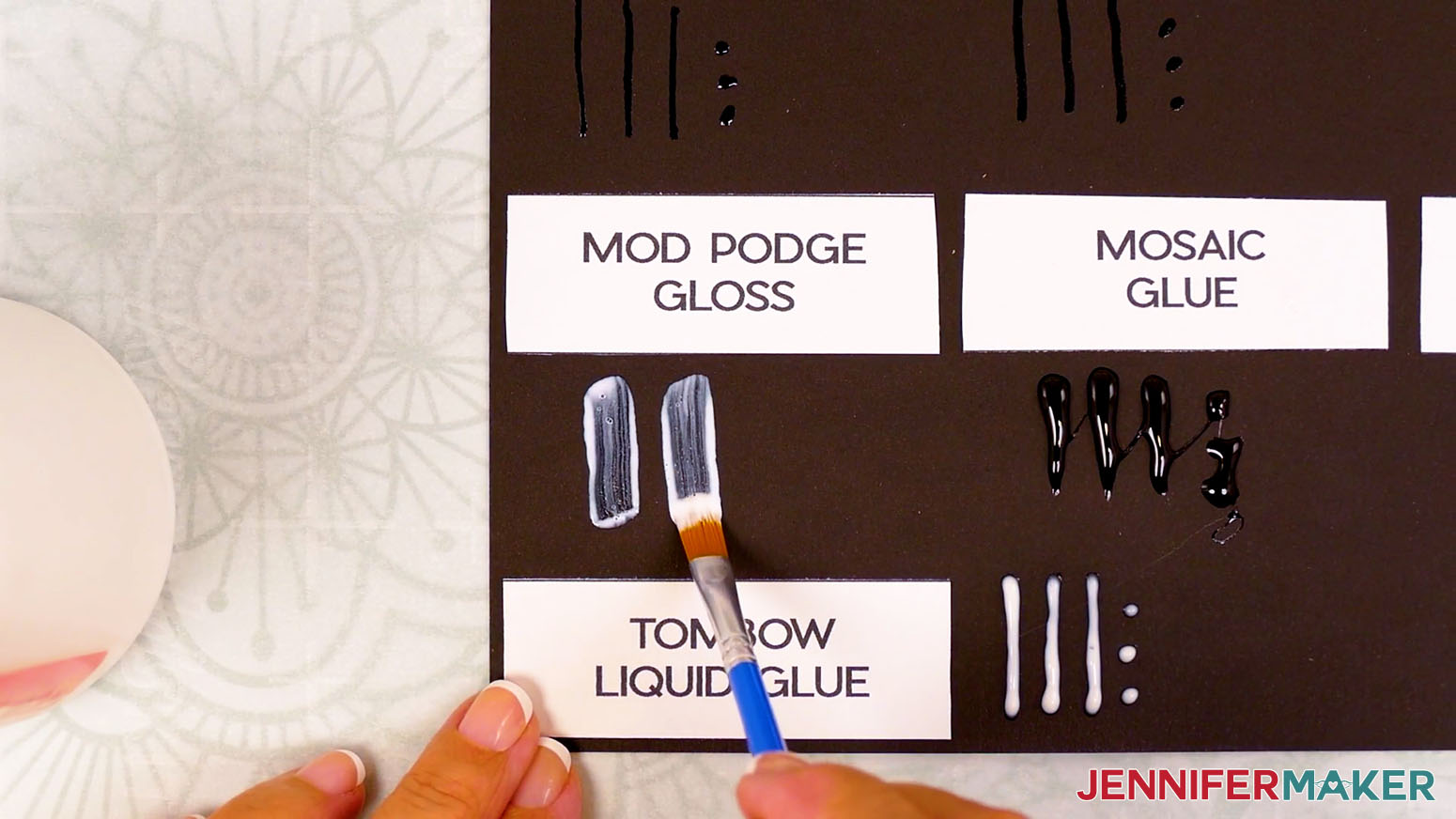
Mod Podge’s main weakness is adhesion under certain conditions. It does not adhere the glitter side of glitter cardstock over large surfaces (so it’s not good for a project that has a glitter back layer), although it performs well with smaller pieces of glitter cardstock. This suggests that piece size, pressure, and surface texture can affect results.
Mod Podge is useful, but it should be chosen for the right type of project. It is not the best option for tiny precision cuts or tension-heavy cardstock assembly.
Best for: decoupage, sealing, large surface coverage, budget-friendly crafting, and projects where a glossy finish is appropriate.
Not ideal for: precision cardstock assembly, delicate cuts, or large glitter cardstock pieces.
BEST CRAFT GLUE #9: ALEENE’S TACKY GLUE
Aleene’s Tacky Glue ranks ninth overall without cost and sixth with cost. Its ranking improves when cost and safety (non-toxic, no PPE required) are included, making it a practical option for general craft use.
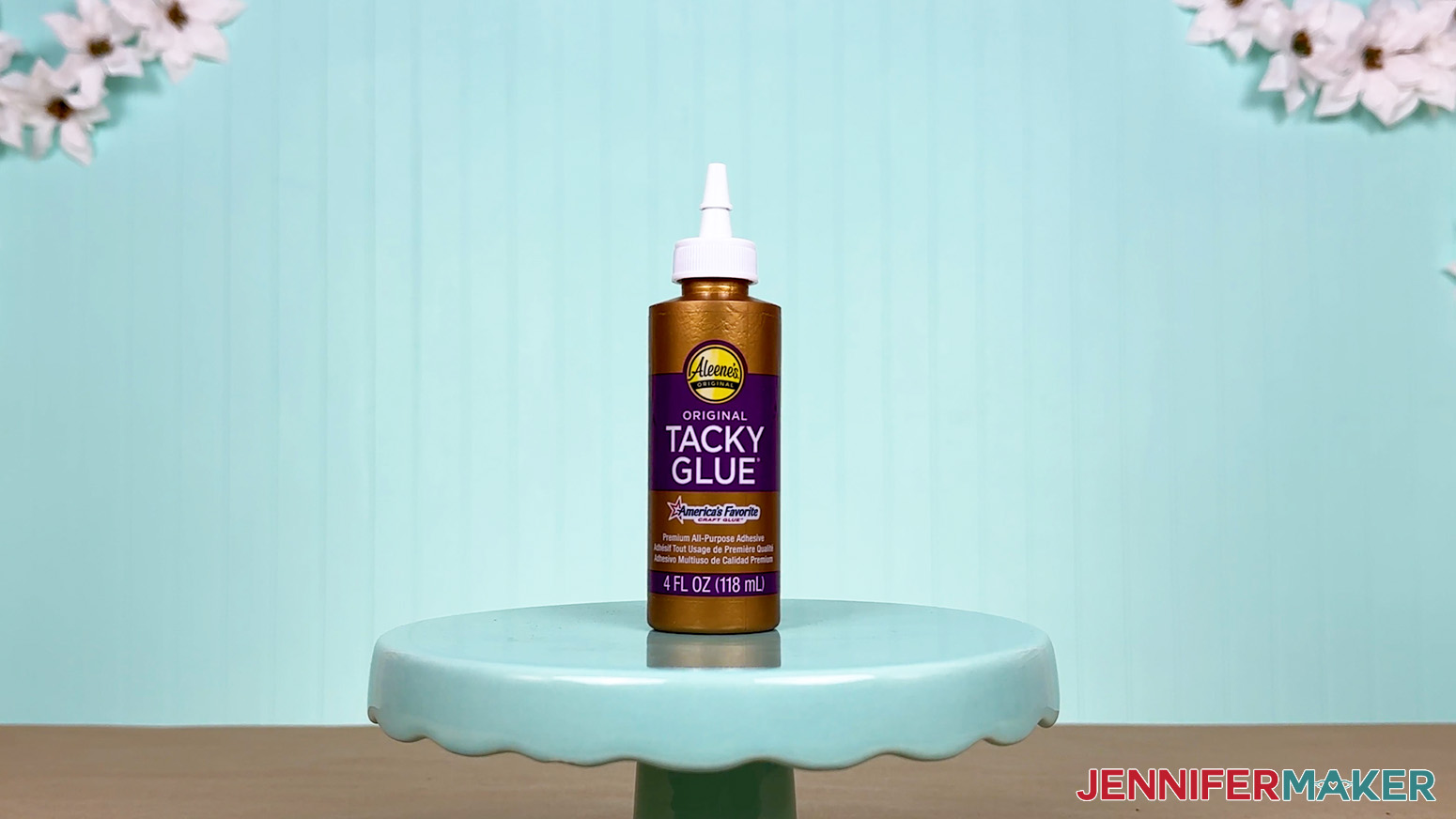
This glue performs especially well in initial adhesion. The thicker formula gives it more grab than many thinner liquid glues, which can be helpful when pieces need to stay in place quickly.
The same thickness also creates some drawbacks. It is harder to create delicate, consistent lines. It also dries slightly milky in some areas because the glue applies more heavily than thinner precision glues.
Aleene’s Tacky Glue is useful when grab and value are more important than extremely fine application or a completely invisible finish. It remains a practical craft-room glue, but it may not be the best choice for highly detailed visible paper layers.
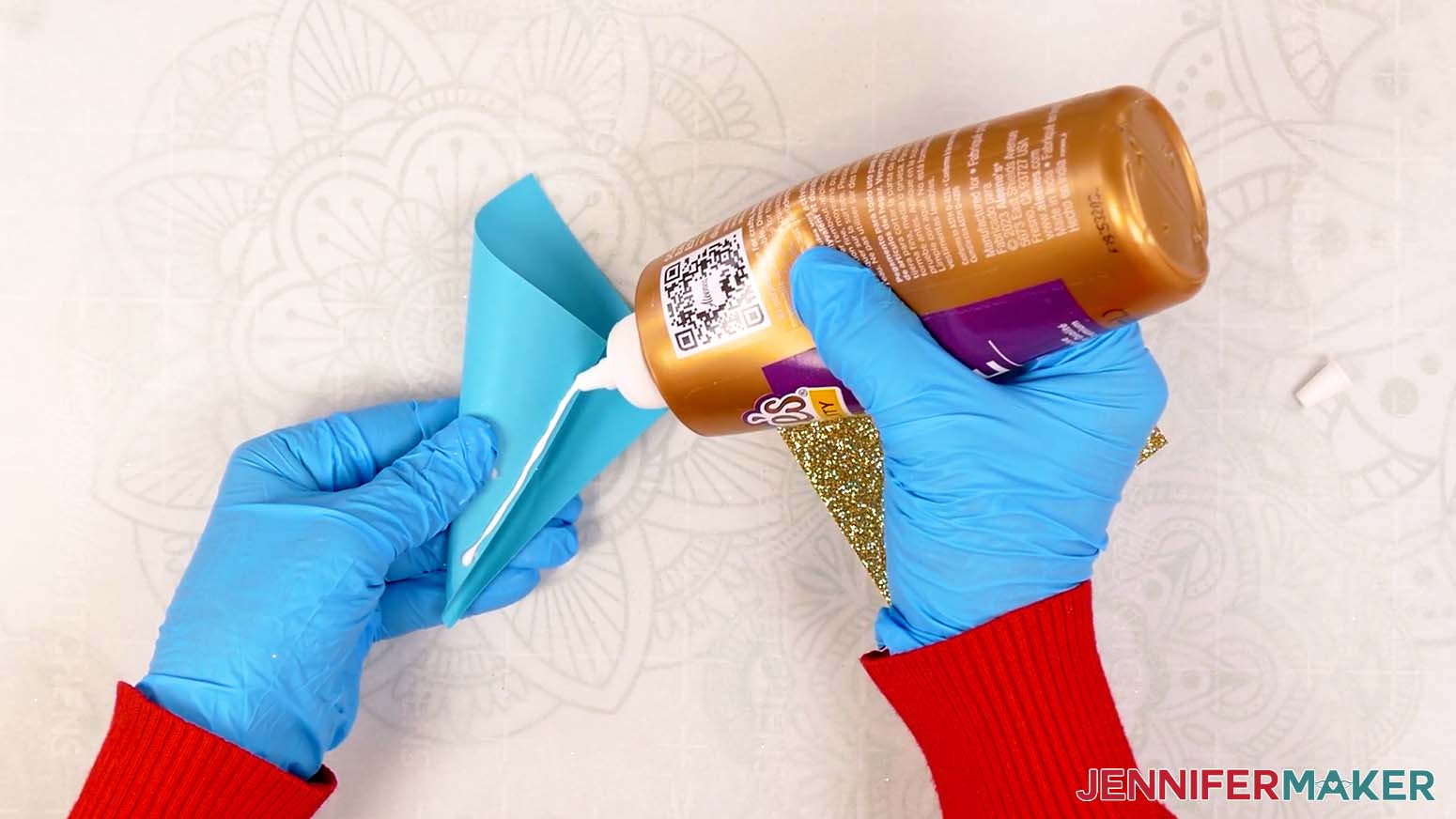
Best for: general crafts, thicker materials, dimensional embellishments, and projects where grab matters more than invisible glue lines.
Not ideal for: tiny Cricut cuts, delicate snowflake-style pieces, or projects where dried appearance is critical.
BEST CRAFT GLUE #10: ART GLITTER GLUE
Art Glitter Glue ties for ninth overall without cost and ranks ninth with cost. It performs well in applicator control, precision, initial adhesion, and constant pressure.
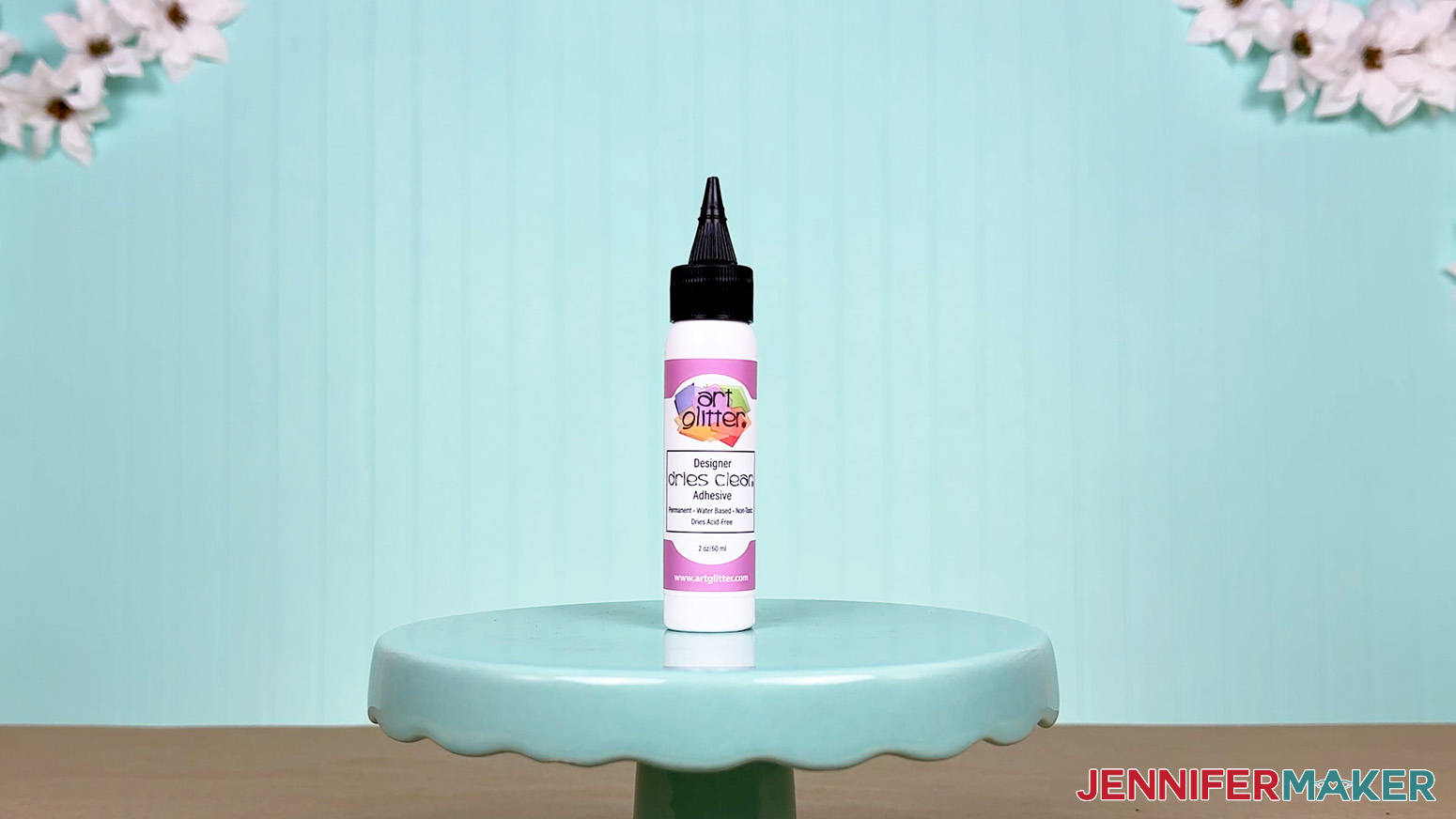
This glue remains a useful option for detailed paper crafting, especially when controlled glue placement is needed. Its performance in practical adhesion categories shows that it can be effective for small embellishments and cardstock assembly.
Art Glitter Glue’s appearance and safety rankings are not as strong as the highest-ranked glues due to a lack of information. The formula is listed as non-toxic, but be sure to wear safety glasses and gloves, just in case. The finished look is not as clean as Bearly Art or Nuvo, which affects its overall placement.
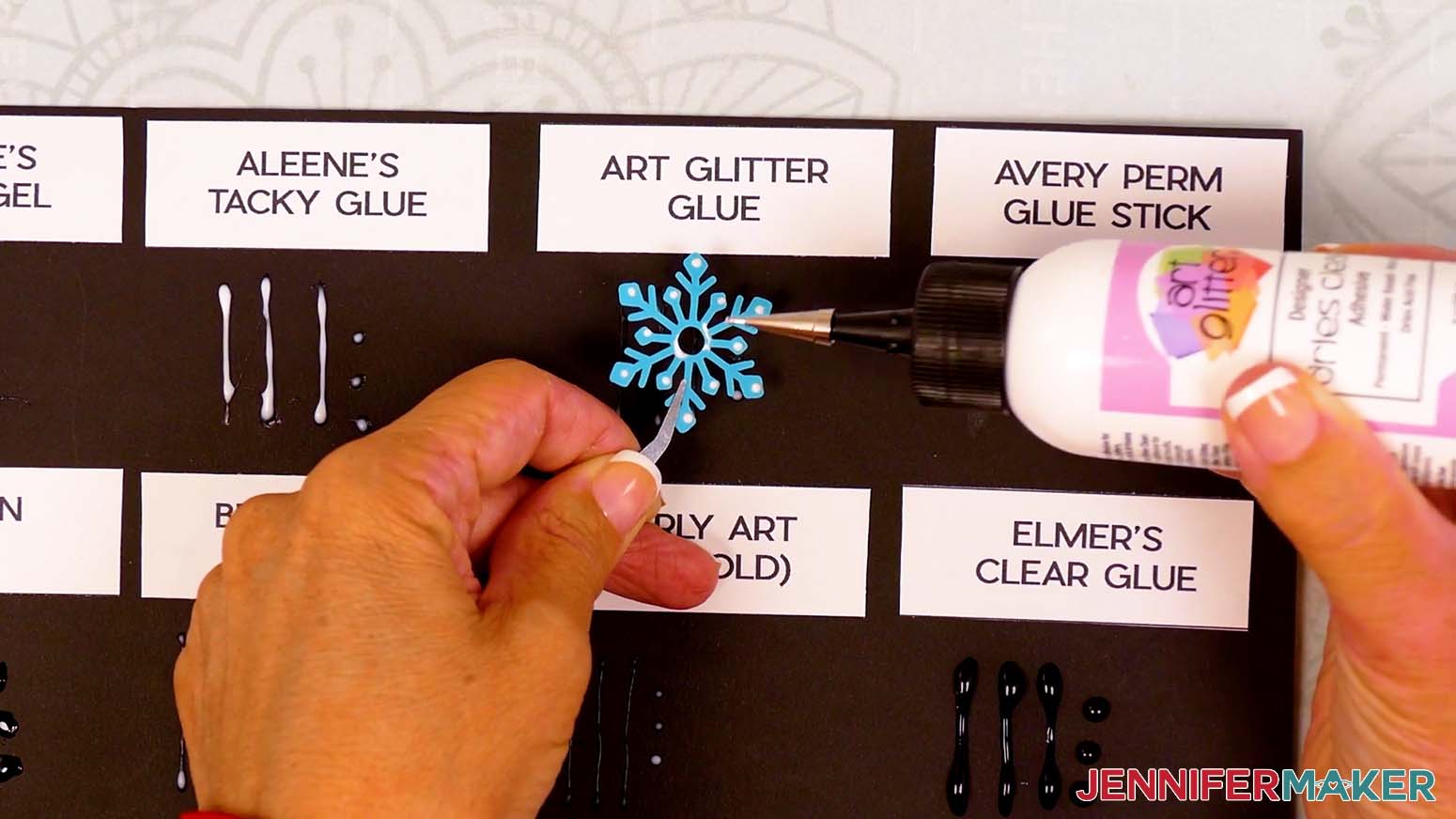
But it may still be a good choice if you are familiar with how much to apply and how to control the adhesive. However, it is not the strongest option when appearance is the deciding factor.
Best for: detailed paper crafting, small embellishments, and projects where precision application is needed.
Not ideal for: crafts where visible glue marks will detract from the overall appearance of the project.
BEST CRAFT GLUE #11: KURETAKE ZIG GLUE PEN 1MM
The Kuretake Zig Glue Pen 1mm ranks eleventh overall without cost and thirteenth with cost. As the finest Zig glue pen in this test, it works best as a detail tool rather than an everyday paper glue.
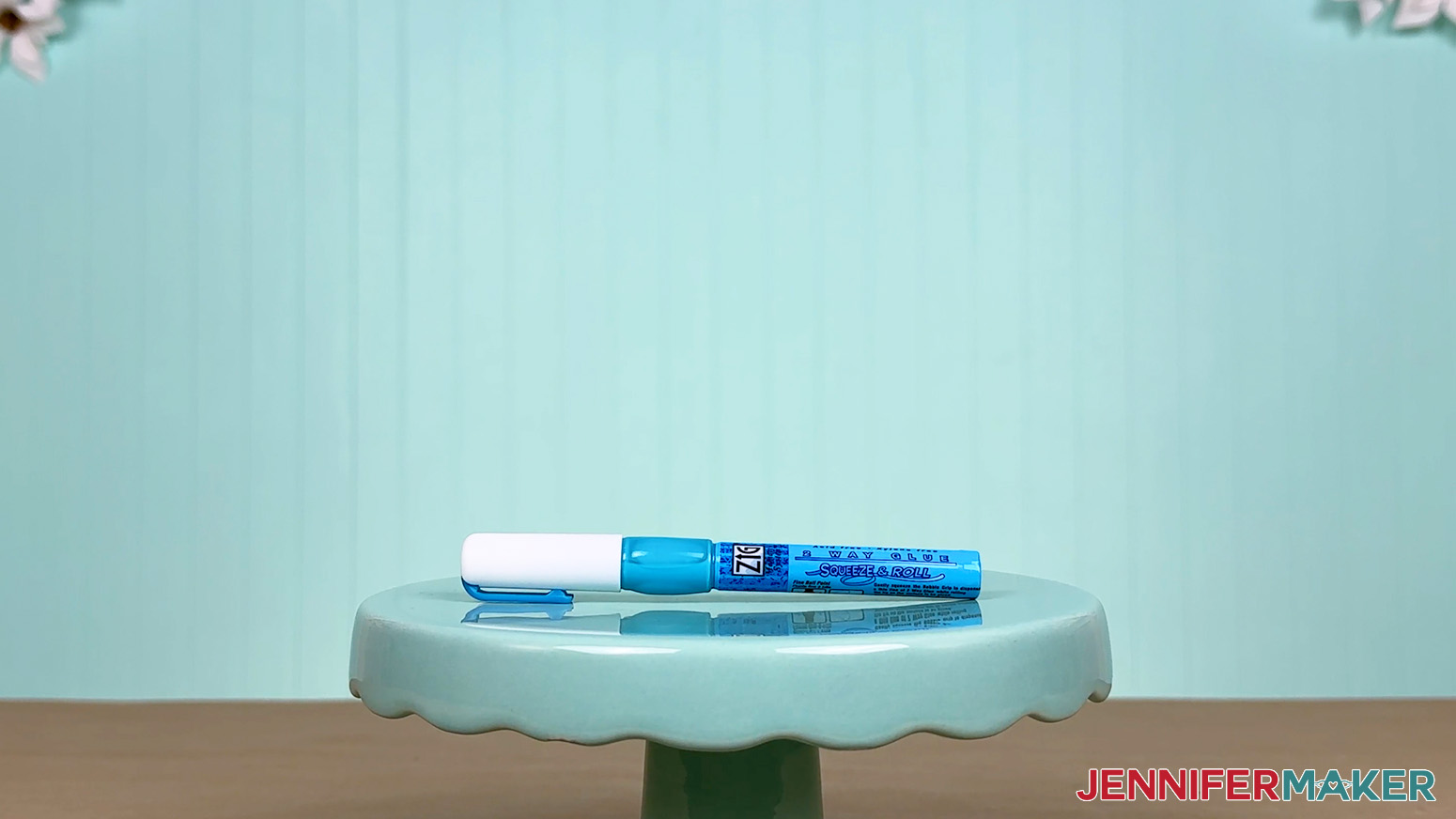
The 1mm tip is useful when you need to place a very small amount of adhesive on tiny tabs, narrow stems, delicate embellishments, or other areas where a larger tip would apply too much glue. Unlike the other Zig glue pens, this one has a squeeze bulb to keep the glue flowing, so it may not be a good choice if you have hand mobility issues.
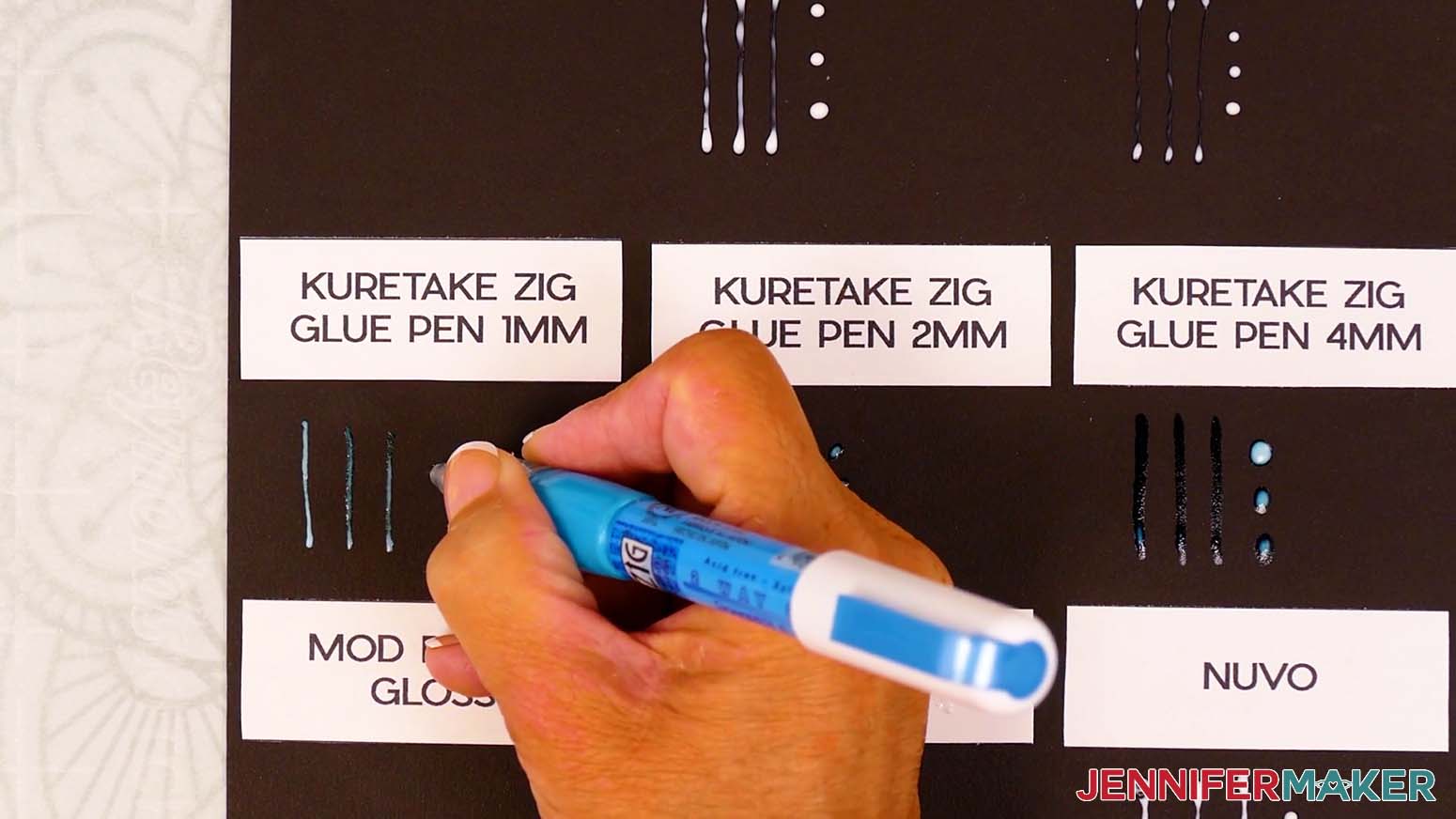
Because of its small tip and lower overall strength, this glue is not the most practical option for larger cardstock pieces, repeated assembly steps, rolled flowers, or projects that need a stronger hold. It is best reserved for precise placement in very small areas.
Best for: extremely small paper details, tiny embellishments, and controlled glue placement.
Not ideal for: everyday assembly, larger Cricut pieces, rolled flowers, or projects where strength and speed are more important than fine placement.
BEST CRAFT GLUE #12: BEACON 3-IN-1 GLUE
Beacon 3-in-1 ranks twelfth overall without cost and eleventh with cost. Its overall placement does not fully reflect its strength, because it performs very well in initial adhesion, constant pressure, temperature testing, and cost.
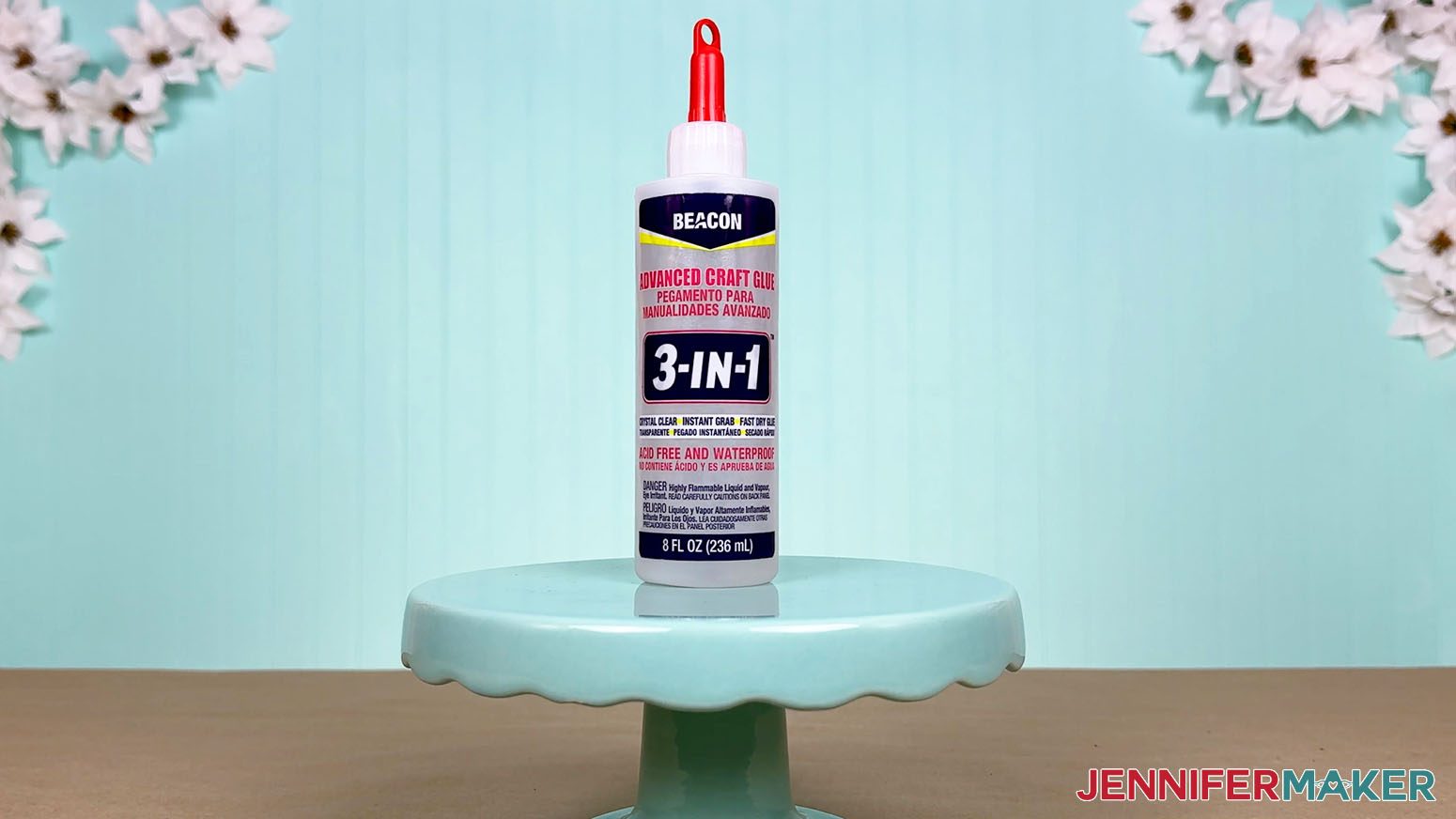
The main issue is application. Beacon 3-in-1 is stringy and difficult to use neatly. The adhesive can trail across delicate designs, which makes it less suitable for fine paper crafting.
This glue also ranks low in the safety category as it contains solvents that may be harmful if inhaled or if it comes in contact with your skin. Always be sure to use it in a room with adequate ventilation, and wear safety goggles and solvent-resistant gloves when using.
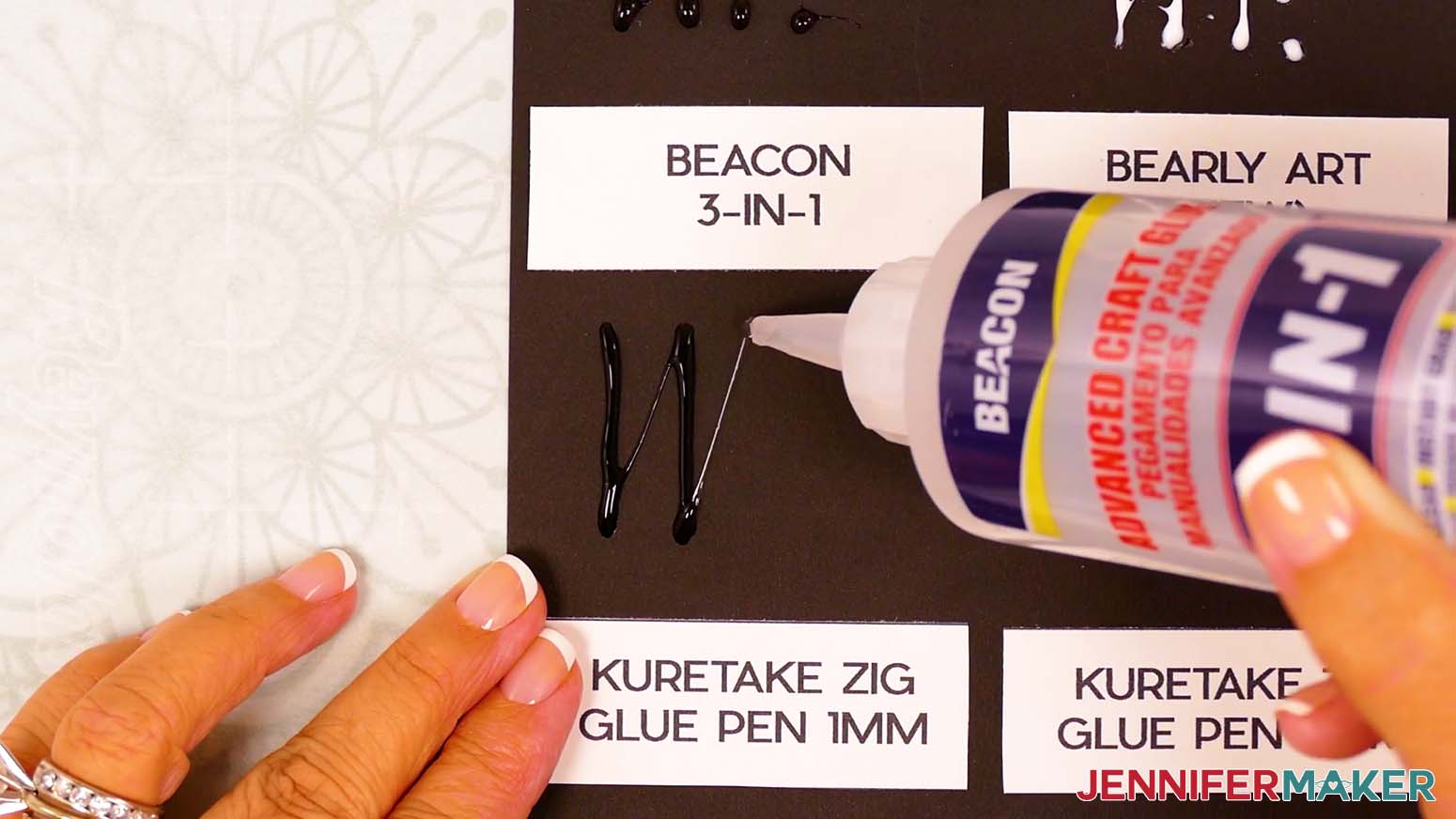
This glue is better suited to mixed-media projects than precision cardstock assembly. It may be useful when stronger adhesion is needed for materials such as fabric, trims, beads, wood, or other embellishments.
For delicate Cricut cuts or visible cardstock layers, the stringiness and application difficulty make it less practical.
Best for: mixed-media crafts, embellishments, wood, fabric, trims, beads, and projects that need a stronger hold.
Not ideal for: delicate cardstock designs, tiny Cricut cuts, or clean visible paper layers.
BEST CRAFT GLUE #13: SCOTCH NO-RUN TACKY GLUE
Scotch No-Run Tacky Glue ranks thirteenth overall without cost and twelfth with cost. It performs reasonably well in constant pressure, but its finished appearance is not as clean as the higher-ranked paper glues, and its precision results keep it in the lower half of the ranking.
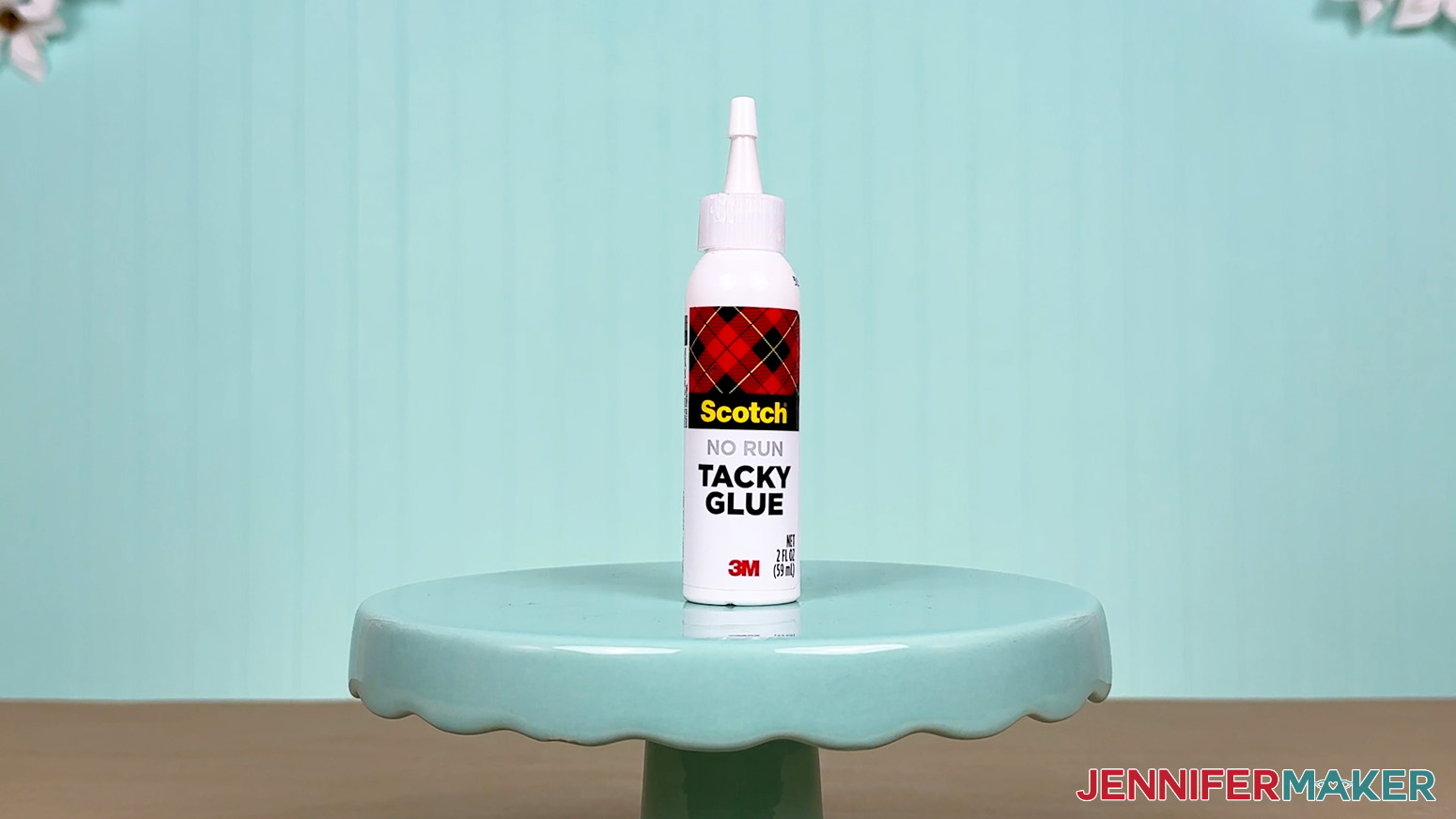
Since its precision performance is only mid-range, it may not be the best choice for visible layers or delicate paper details. But, it could be more useful if you want a tacky adhesive that does not run as much as thinner liquid glues. Just be sure to wear gloves when using.
However, it does perform well in different temperatures, so if you have a project that needs to stay intact while moving between climates (like mailing cross-country or long-distance traveling), it can be a solid choice.
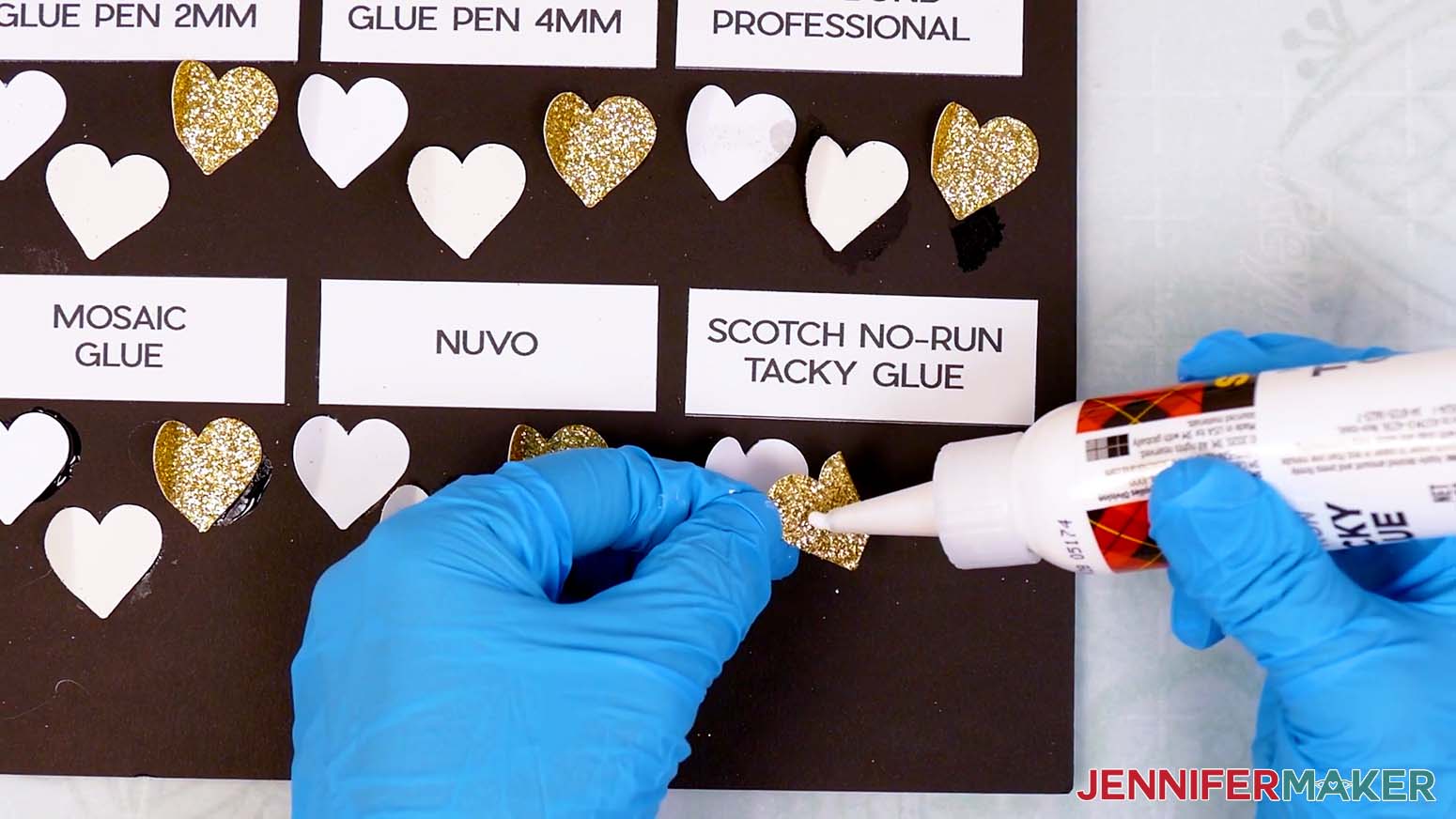
Scotch No-Run Tacky Glue can be a practical option for general use, but it is not the top choice when clean drying and fine control are priorities.
Best for: general paper projects, budget-conscious crafting, and pieces that need decent pressure hold.
Not ideal for: clean premium cardmaking, delicate visible layers, or projects where dried glue appearance matters most.
BEST CRAFT GLUE #14: ALEENE’S CLEAR GEL
Aleene’s Clear Gel ranks fourteenth overall without cost and fifteenth with cost. It has a clear gel format and decent cost, but it is not one of the stronger performers for detailed paper crafting. It is also not one of the safer adhesives; safety glasses are a must when working with this glue.
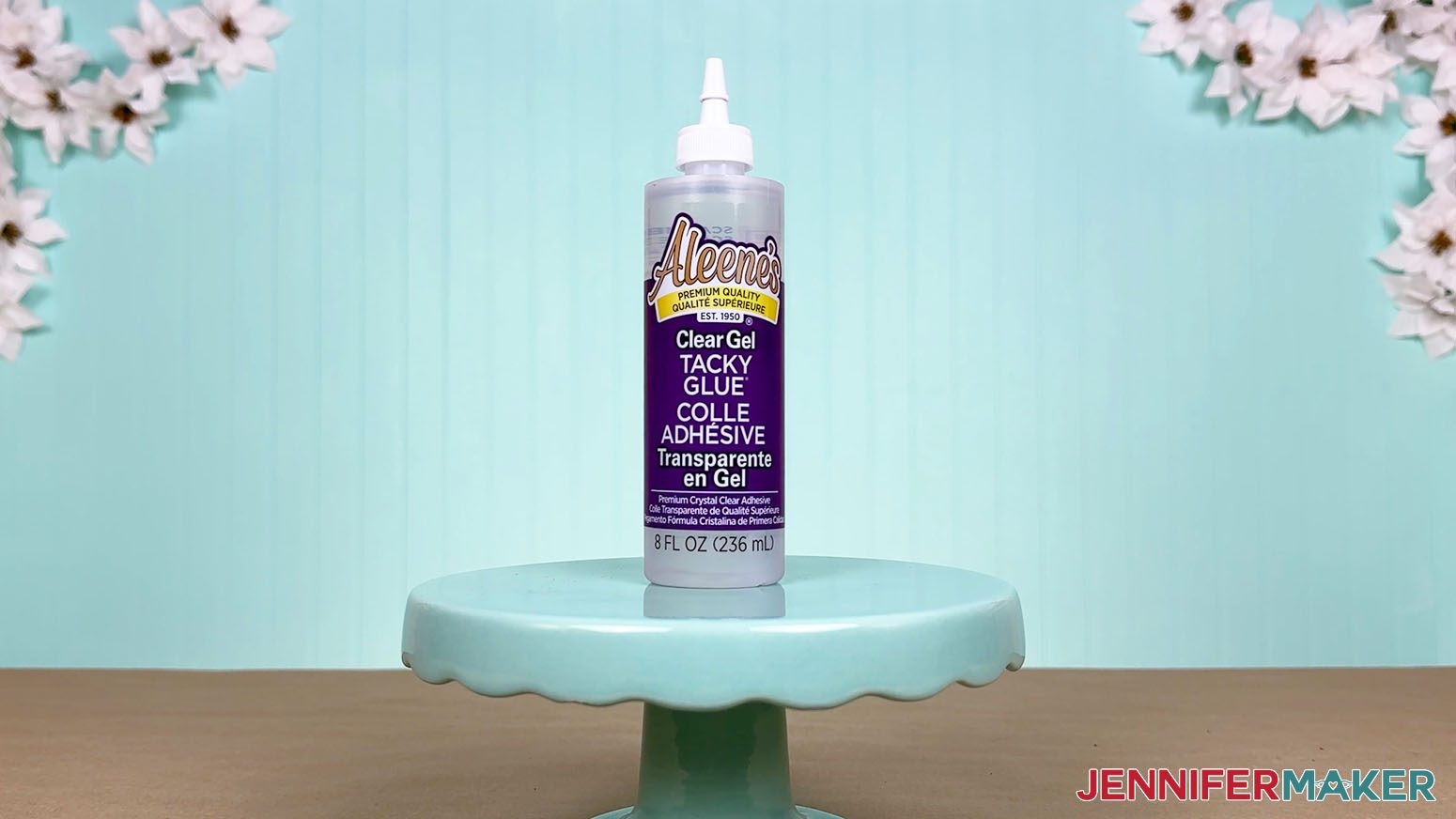
The thicker gel texture may seem useful because it is less likely to run immediately like a thinner liquid glue. However, in practice, that same texture makes it harder to control in fine, consistent lines. It does not perform especially well for precision work, pressure-heavy pieces, or temperature changes.
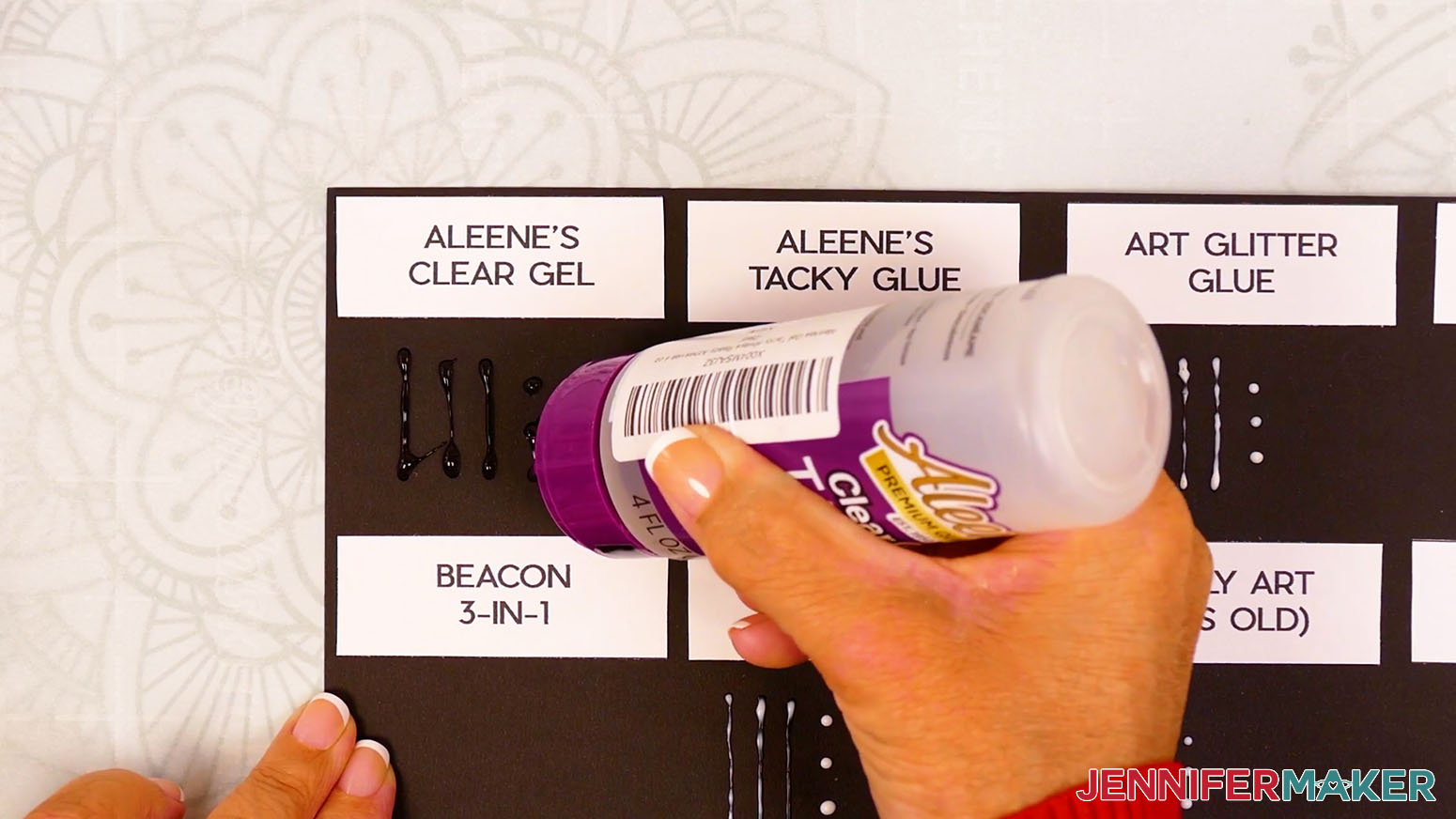
This glue may still be suitable for basic craft projects where a clear gel adhesive is preferred, but it is not the best choice for intricate cardstock assembly or projects where clean, controlled application matters most.
Best for: basic crafts where a clear gel format is preferred.
Not ideal for: intricate cardstock assembly, pressure-heavy shapes, or projects where top-tier performance is needed.
BEST CRAFT GLUE #15: ELMER’S CLEAR GLUE
Elmer’s Clear Glue ranks fifteenth overall without cost and fourteenth with cost. It scores well for cost and safety (though safety glasses and gloves are recommended), but it is not a strong performer for detailed paper crafting.
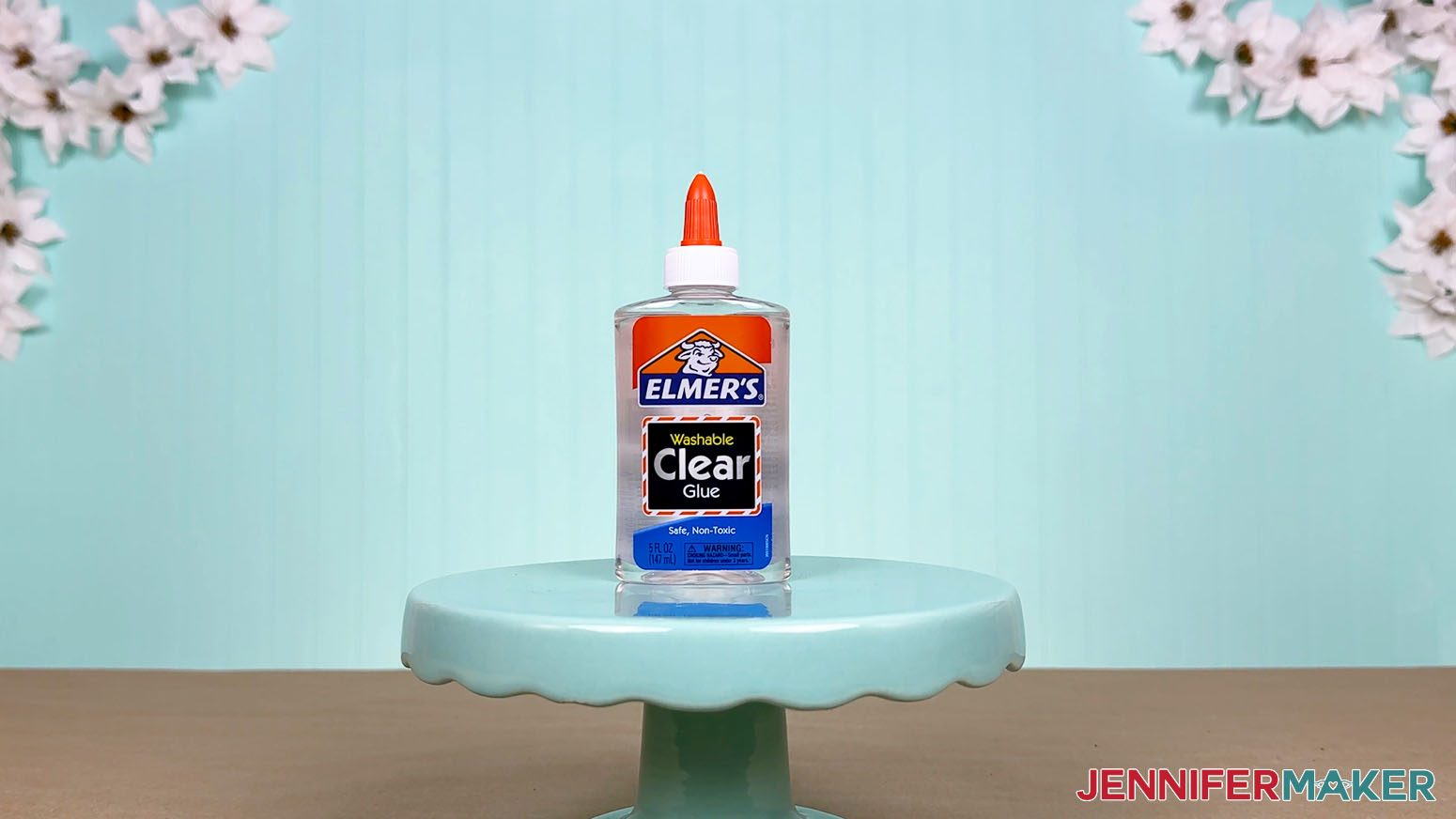
This glue is easy to find and works well for school projects, kids’ crafts, slime, and simple, low-pressure paper projects. It also gives you more time to adjust pieces before they set, which can be helpful for casual crafting.
The main limitation is control. The formula is very fluid and tends to spread out, making it difficult to place precisely on small cardstock pieces or detailed Cricut cuts. It also does not perform as well in initial adhesion, constant pressure, or temperature testing.
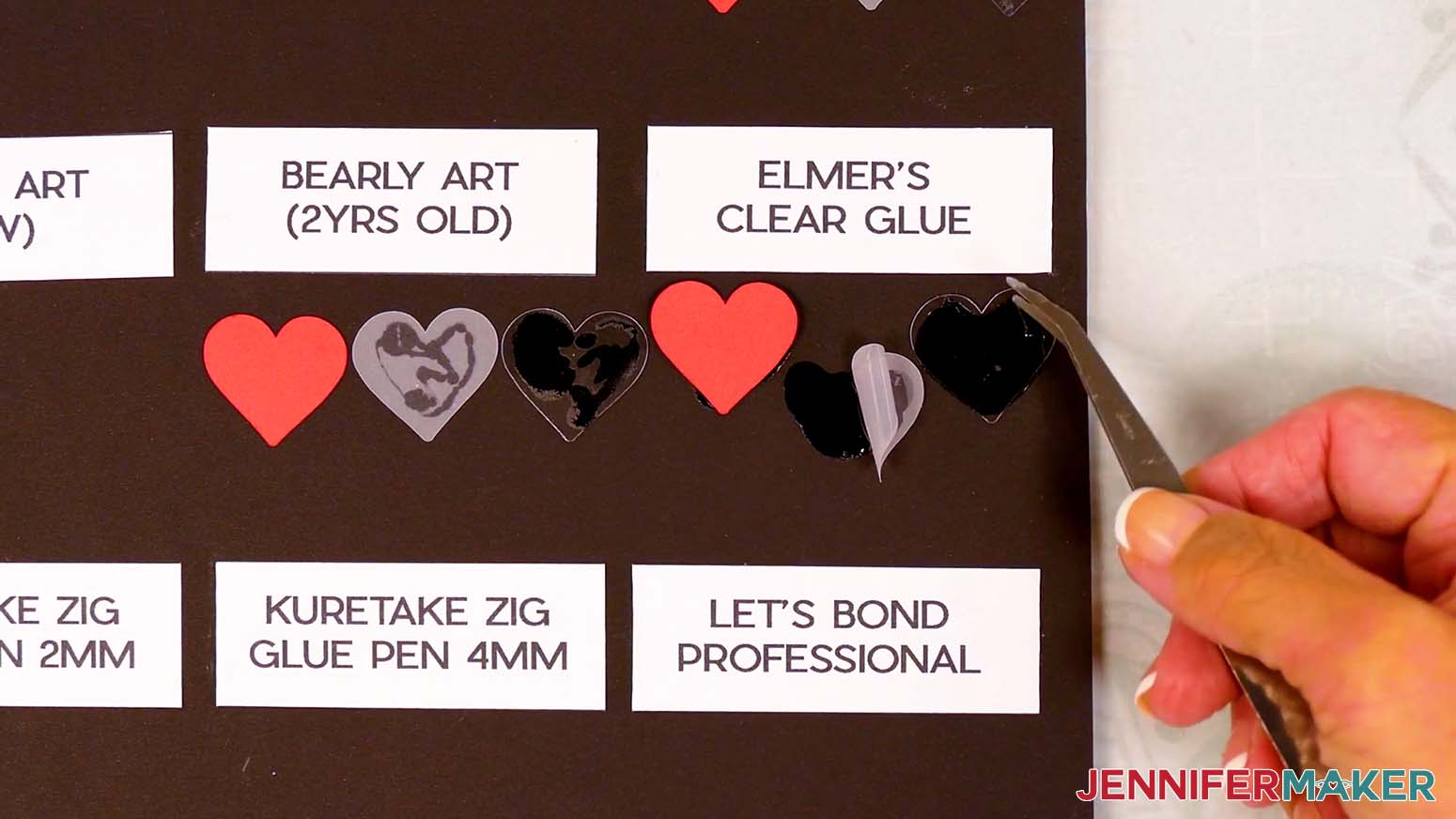
Elmer’s Clear Glue is a convenient general-use glue, but it is better suited to simple crafts than polished Cricut projects, dimensional cardstock, glitter cardstock, or projects that need a strong, long-term hold.
Best for: kids’ crafts, school projects, slime, washable crafting, and low-stakes paper projects.
Not ideal for: precision work, dimensional paper crafts, glitter cardstock, or projects that need a strong, long-term hold.
BEST CRAFT GLUE #16: MOSAIC GLUE
Mosaic Glue ranks sixteenth overall, both with and without cost. Its best performance is in the constant pressure area, but it ranks lower in applicator control, precision, appearance, and initial adhesion. Additionally, there is a lack of readily available safety information. The formula is listed as non-toxic, but be sure to wear safety glasses and gloves, just in case.
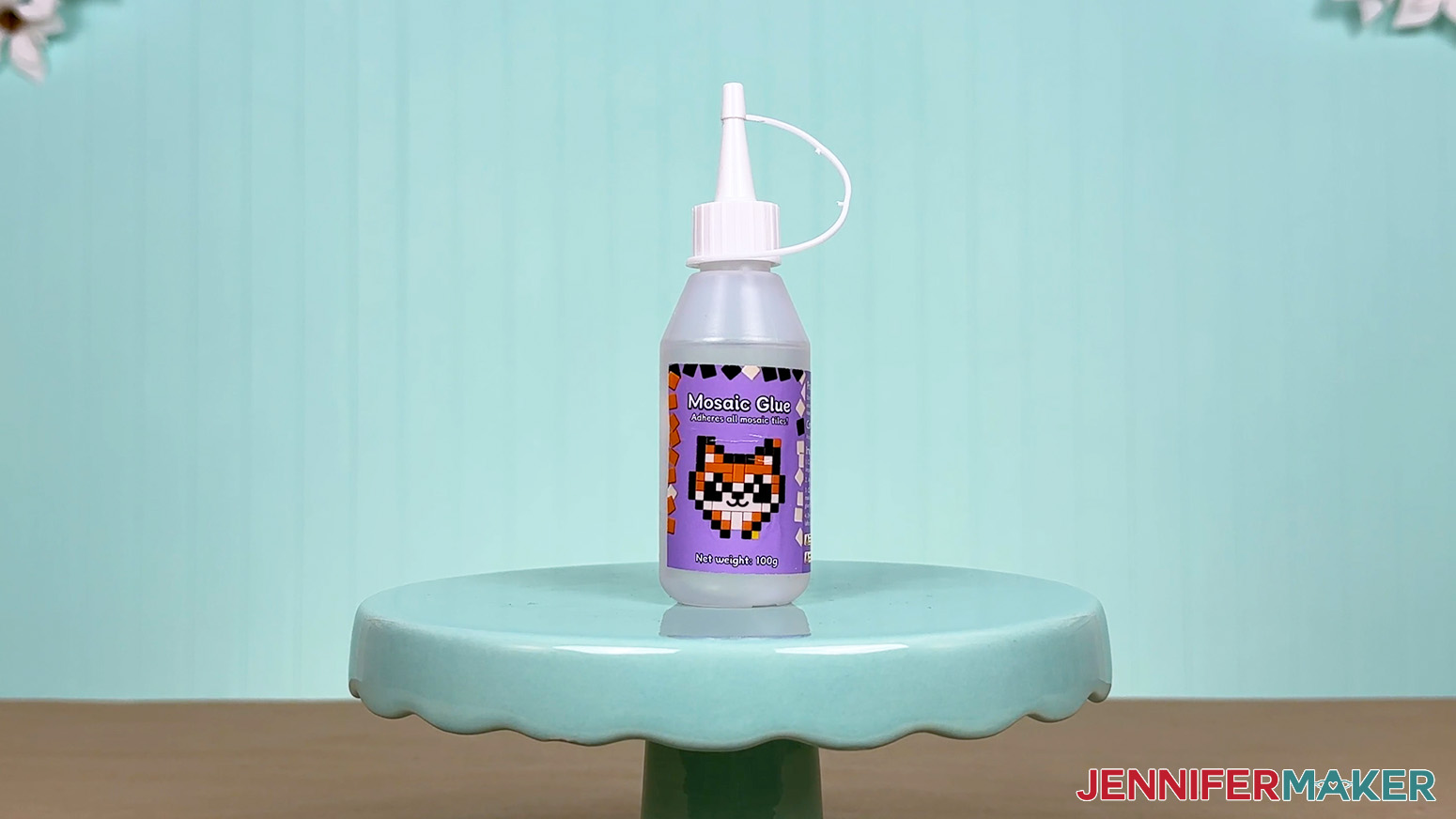
These results make more sense when you consider what Mosaic Glue is designed to do. It is a thicker specialty adhesive intended for mosaic-style projects and heavier materials, not fine paper crafting. That thicker formula may be useful when you need pieces like tile, plastic, ceramic, or wood to hold, but it makes the glue harder to control on small cardstock pieces.
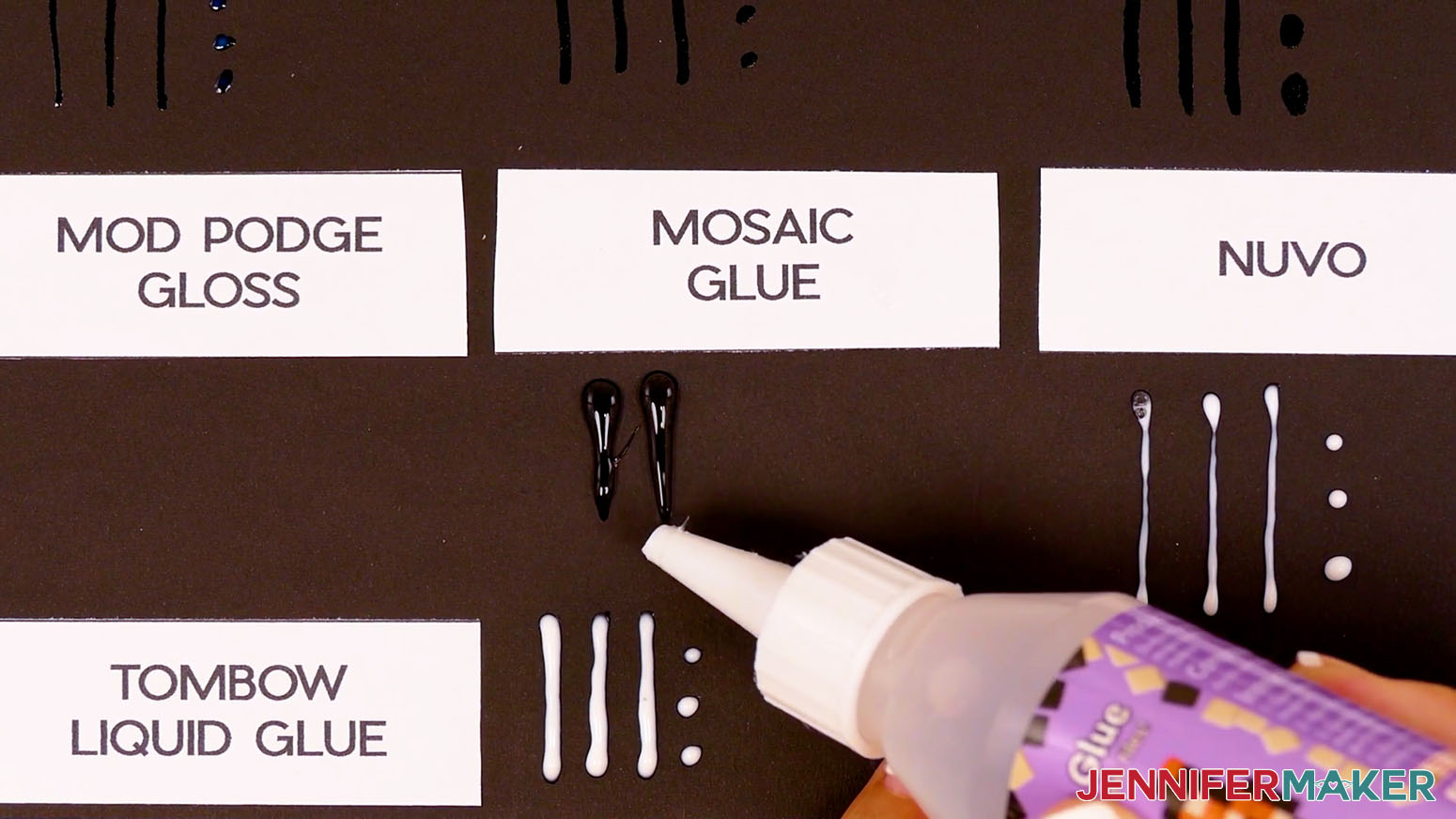
For detailed paper projects, Mosaic Glue is not the best fit. It does not create consistent fine lines or tiny dots easily, so it is better reserved for specialty projects where strength and material compatibility matter more than precision.
Best for: mosaic projects, ceramic pieces, plastic, wood, and specialty crafts where the glue’s intended purpose matches the material.
Not ideal for: precision paper crafting, delicate Cricut cuts, or clean visible cardstock layers.
BEST CRAFT GLUES BY PROJECT
No single glue is best for every craft project. The best choice depends on the material, the amount of precision needed, the desired appearance, and whether the finished project will be exposed to pressure or temperature changes.
Here are my recommendations based on the type of craft project:
For detailed paper crafting, Bearly Art, Nuvo, Tombow, and Art Glitter Glue are among the strongest options. Bearly Art ranks best overall, especially for precision and clean application.
For large surface coverage or sealing, Mod Podge Gloss offers the best value and is better suited to broad application than precision work.
For projects that need a stronger grab, Aleene’s Tacky Glue may be useful, though it is less ideal when appearance and fine detail are important.
For strength-focused projects, Beacon 3-in-1 performs well in adhesion categories, but it’s harder to use neatly on delicate paper projects.
For quick, low-mess paper projects, a glue stick may be practical, but it is not the best choice for pressure, heat, or dimensional cardstock work.
Answers to Your Questions About the Best Craft Glues
Q: What is the best craft glue from this test?
A: Bearly Art Glue was the best craft glue overall for detailed paper crafting. It gave me the strongest balance of control, clean appearance, reliable hold, and precise placement. The fresh bottle performed especially well across the tests.
Q: What is the best glue for tiny Cricut cuts?
A: For tiny Cricut cuts, I’d choose Bearly Art Glue first. Nuvo Deluxe Adhesive is also a good choice. A glue pen can help with very small pieces because you can place adhesive almost like you’re drawing it on. The 2mm Zig pen felt like the best balance in my test.
Q: Are glue sticks good for paper crafts?
A: Glue sticks can be useful for simple flat paper crafts. They’re clean, quick, and easy for beginners. But they’re not the strongest option. In my test, the glue stick didn’t perform as well under pressure or heat.
Q: When should I use Mod Podge?
A: Mod Podge is best for broad coverage, sealing, and decoupage. It’s a popular choice when you’re covering larger areas or brushing adhesive over a surface. It’s not the right glue for tiny cardstock details or precise lines.
Q: Which glue worked best on vellum and acetate?
A: Bearly Art, Nuvo, and Tombow looked cleaner than many others on see-through materials. Vellum and acetate reveal glue lines easily, so test first. Clear glue can still leave visible marks after drying.
Q: What is the best adhesive for dimensional paper projects?
A: For dimensional paper projects, you need a stronger bond than you need for flat layers. Bearly Art did well overall. Beacon 3-in-1 also held strongly, but it was harder to control. Choose based on how much neatness your project needs.
Q: Is liquid glue always better than a glue stick?
A: Not always. Liquid glue usually gives better strength and more precise application. But glue sticks can be easier for kids, quick layers, and simple school glue-style projects. For polished paper crafting, I usually prefer a controlled liquid glue.
Q: What is the right glue for large areas?
A: For large areas, choose something that spreads smoothly. Mod Podge is a good choice for coating and sealing. A broad applicator or brush can also help spread the glue quickly and evenly for a full coat in no time at all.
Q: Why does dry time matter?
A: Dry time affects how long your pieces can move. A longer dry time gives you more adjustment, but it can also let pieces slide around and move out of place. A shorter drying time can help pieces stay put, but it gives you less room to fix placement. It’s a delicate balance, so take your materials, the size of your pieces, and the complexity of your project into account when choosing your glue.
Q: Which glue gives an instant bond?
A: Some stronger glues can feel closer to an instant bond, especially on certain surfaces. Beacon 3-in-1 grabbed quickly in my test. But fast grab isn’t always better. If you need careful placement, a little working time helps.
Q: What is the right type of glue for glitter cardstock?
A: Glitter cardstock can be harder to glue because of the textured surface. A strong adhesive may work better than a light paper glue. For curled or dimensional glitter pieces, choose a glue that handles pressure well, such as Scotch No-Run Tacky Glue or Beacon 3-in-1 glue.
Q: Is Aleene’s Tacky Glue good for craft projects?
A: Aleene’s Tacky Glue is helpful when you need grab. Its thicker texture keeps it from running everywhere. But it can be harder to apply in tiny lines. It may also dry more visibly if you use too much.
Q: Is Art Glitter Glue still worth using?
A: Art Glitter Glue performed pretty well in the precision test. It’s useful for detailed work if you’re comfortable controlling the flow as you apply it. In this test, Bearly Art and Nuvo looked cleaner overall, but Art Glitter Glue still has specific uses.
Q: What should I use for different materials?
A: Different materials need different types of glue. Cardstock, vellum, acetate, glitter cardstock, and photo paper don’t behave the same way. Always test scraps first, especially if your material is shiny, coated, curled, or see-through. My test sheets gave me a good idea of how each glue works with the different materials, so watch my video for more information about that.
Q: Are non-toxic glues enough for safe crafting?
A: Non-toxic glues are helpful, but you still need to read the label. Some craft glues need a well-ventilated area, gloves, or extra care. I wore safety glasses, gloves, and an apron during testing to make sure I was always protected, no matter which glue I was testing.
Q: What is the strongest adhesive in the test?
A: Beacon 3-in-1 was the strongest adhesive of all the glues I tested. It bonded well in pressure tests, and stayed adhered during the temperature tests. But it was stringy and harder to control, so it isn’t my best choice for delicate paper pieces. It might be better suited for projects with pieces subject to gravity — you wouldn’t want pretty flowers to fall from the top of a paper bouquet!
Q: Why did you test an older bottle of Bearly Art Glue?
A: I wanted to see if age mattered. The two-year-old Bearly Art bottle still performed surprisingly well. Of course, the fresh bottle held better in certain tests, so for an important project, I’d use a newer bottle.
Q: Why did you use different tips and smaller bottles during testing?
A: I wanted each glue test to be as fair as possible. Some bottles came with precision tips or narrow applicators, while others were harder to control from the original bottle. Smaller test bottles helped me apply a similar amount of glue, especially during the adhesion tests, so I could compare the glues more evenly.
Q: Can I use white glue for paper projects?
A: Yes, but don’t judge a glue only by how it looks when it’s wet. Some glues look white when you apply them and still dry cleanly enough for detailed paper crafting. Bearly Art Glue is a good example from our testing. It goes on white, but dries cleanly when using a small amount, even on trickier materials like vellum and acetate.
Q: How do I avoid sticky situations with glue?
A: Always use less glue than you think you need. Most craft glues are formulated to be strong without needing to apply a lot of product. I also recommend matching the glue to the project. Avoid thin, runny glues with small pieces, and always watch for spreading, strings, and sliding. And always give the glue enough time to set before handling the finished piece.
Q: What is the best choice if I only want one glue?
A: If you mostly make detailed paper crafts, Bearly Art Glue is my best choice from this test. If you mostly seal, coat, or decoupage, keep Mod Podge nearby. If you make a wide variety of materials and project styles, you may want more than one glue, but I still find that Bearly Art is capable of handling a variety of different materials and techniques. I usually try it first, and then seek out something different if it’s not working the way I want.
Q: Where can I get help if I get stuck?
A: If you want quick troubleshooting or you want to show off your glue tests or finished projects, my Cricut Facebook group can be a helpful place to compare notes and see what others are doing. You can also find helpful tips about a variety of different glues from other community members.
Get my free reference chart for the Best Craft Glues!
(If you do not see the signup form above, click here.)
Feeling inspired to conduct a test of your own? Let me know the best craft glues for your favorite materials and techniques! Feel free to share photos of your tests and results in our Facebook group or tag me on social media with #jennifermaker.
Love,
Want to remember this? Save this Best Craft Glues project to your favorite Pinterest Board!